
Table of contents
Periodontal disease is a bacterial infection that gradually destroys the gums, jawbone, and tissue supporting your teeth. Without proper intervention, it can lead to loose teeth or even tooth loss. At VITAdent, we offer expert gum disease treatment in Sheepshead Bay to catch infection early, controlling the spread and protecting both your smile and overall health.
What Is Periodontal Disease?
Periodontal or gum disease is an inflammatory and infectious condition affecting the tissues around your teeth, which include your gums, jawbone, and periodontal ligaments. Over time, the infection and inflammation gradually destroy these structures, causing your teeth to loosen in their sockets eventually.
Advanced periodontal disease can also impact general health. It is increasingly linked to many serious health conditions.
How Does Periodontal Disease Develop?
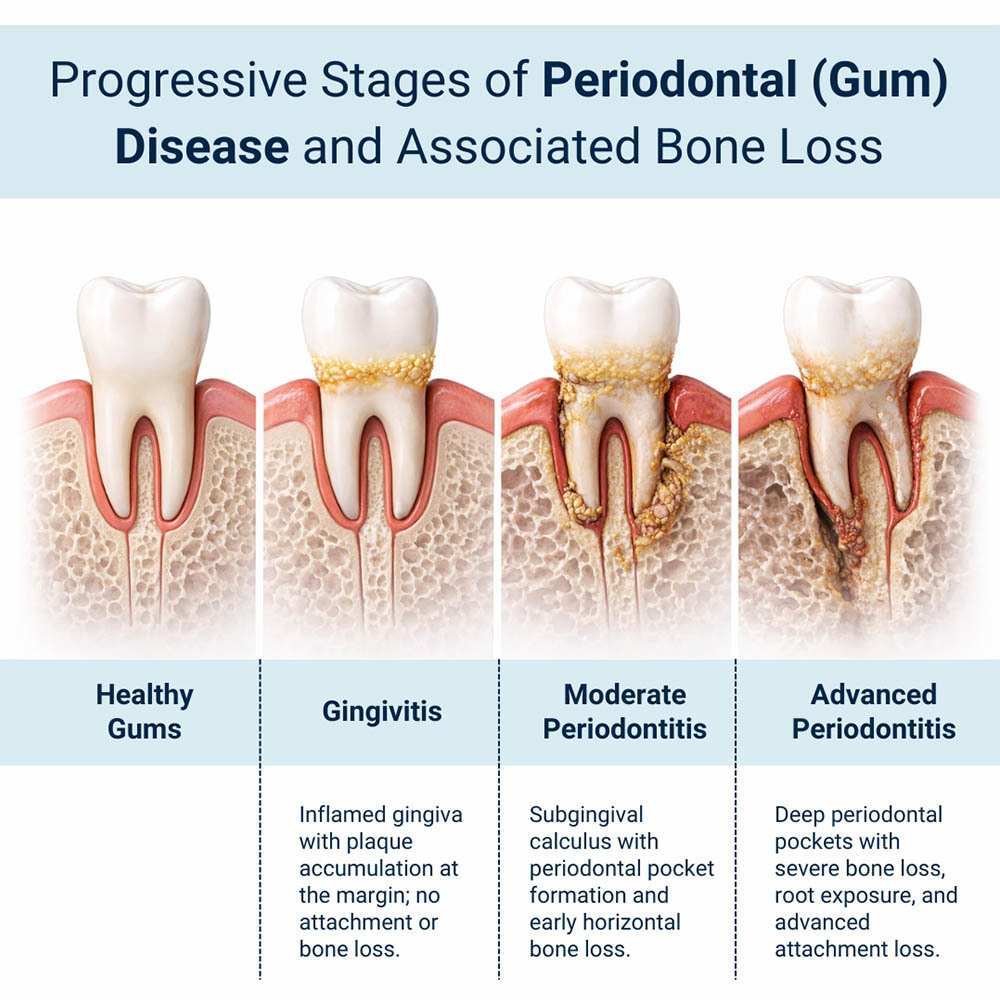
Periodontal disease develops when bacteria in dental plaque accumulate on tooth surfaces, rather than being removed through regular brushing and flossing. These plaque bacteria produce toxins that infect and inflame your gums.
There are several different stages in the development of periodontal disease, which are:
- Gingivitis.
- Mild periodontitis.
- Moderate periodontitis.
- Advanced periodontitis.
1. Gingivitis
When periodontal disease first develops, the symptoms are mild. You may notice your gums look a bit red or puffy. They may bleed slightly when brushing or flossing. Gingivitis is completely reversible with prompt treatment.
2. Mild Periodontitis
At this point, the bacteria in dental plaque have penetrated your gums and the bone around your teeth. You may notice signs of gum recession.
As your gums pull away from your teeth, it creates pockets or gaps in between your teeth and gums. These are the ideal places for harmful bacteria to thrive and can be tricky to clean with a toothbrush or dental floss.
3. Moderate Periodontitis
Without treatment, moderate periodontitis will begin to destroy the periodontal ligaments. These are stretchy pieces of soft tissue holding your teeth in their sockets. At this point, your gums may start to feel painful. You could experience persistent bad breath and a pus buildup around your gum line.
4. Advanced Periodontitis
By this stage, the bone loss around your teeth will have worsened. Your teeth may start to feel loose or may even fall out.
What Can Cause Periodontal Disease?
The bacteria in dental plaque cause periodontal disease. Dental plaque is a sticky biofilm that contains hundreds of different bacterial strains, including those that are harmful. Poor oral hygiene is a significant contributor to periodontal disease. Failing to remove dental plaque through regular brushing and flossing allows harmful bacteria to thrive and multiply, ultimately leading to dental problems.
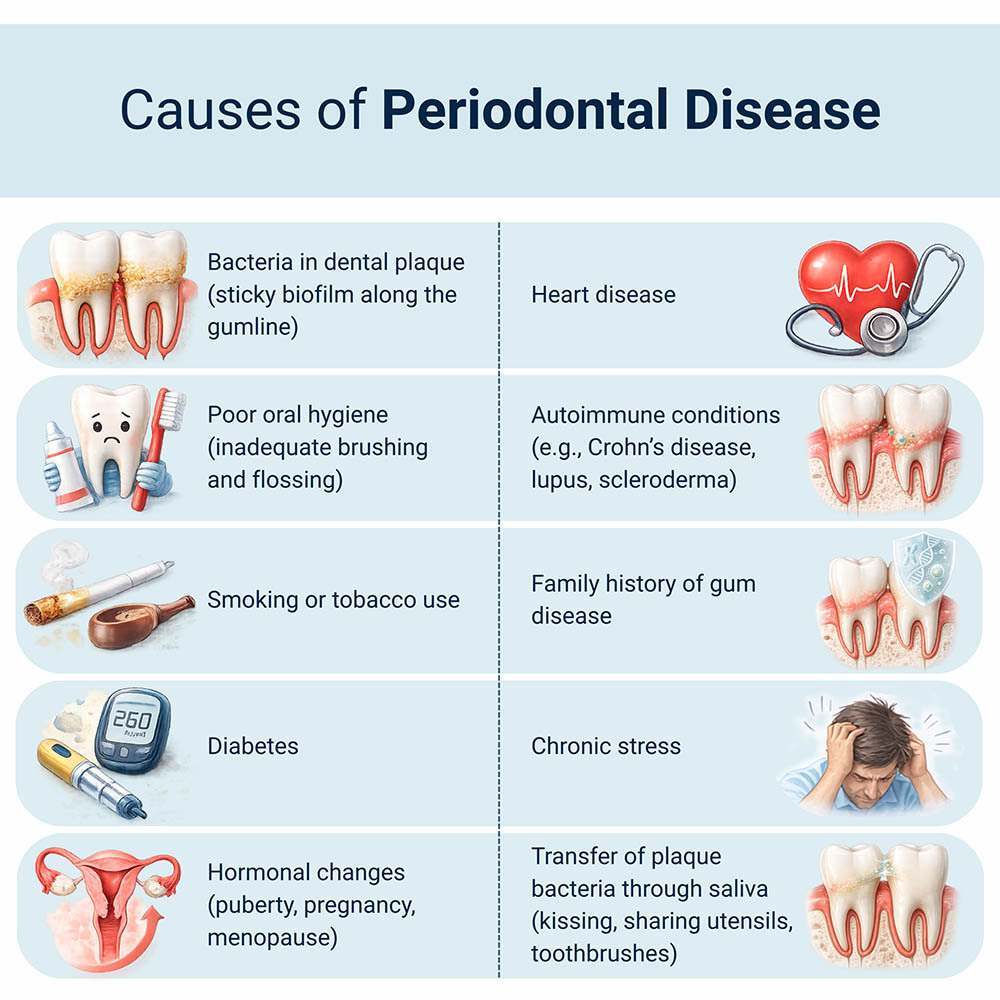
However, other factors can increase your risk of developing this condition, including:
- Smoking or using tobacco products constricts the blood vessels in your gums, making it harder for nutrients to reach them and fight infection and inflammation.
- Diabetes.
- Hormonal changes during puberty, pregnancy, and menopause can increase the sensitivity of gum tissue toward plaque bacteria, so the risk of inflammation is higher.
- Heart disease.
- Autoimmune diseases that make it harder to fight infection, such as Crohn’s disease, lupus, and scleroderma.
- Having a family history of gum disease, as that may be a genetic connection.
- Stress, as people who are stressed might be less likely to pay attention to their oral care.
It is also possible to pass on plaque bacteria that cause gum disease from one person to another through close contact where saliva is exchanged. Close contact includes kissing, sharing utensils, and using the same toothbrush.
While receiving plaque bacteria through contact does not necessarily mean you will develop periodontal disease, it can increase your risk if you have other risk factors, such as poor oral care or underlying medical issues.
Gum Disease Symptoms
Because gum disease is such a common condition, it’s worth knowing the symptoms and what to look out for.
Symptoms can include:
- Bleeding gums.
- Sore gums.
- Gum discolouration so your gums look red or purple.
- Swollen gums.
- Bad breath and an unpleasant taste.
- Pain when eating.
- Gum recession so your teeth may start to look longer than before.
- Loose teeth.
- Changes to the way your teeth bite together.
Gum disease is also sometimes referred to as a silent disease, because its early symptoms are often easy to miss. This can be particularly true if you smoke because your gums are less likely to bleed as the blood vessels constrict when exposed to nicotine.
Why Good Gum Health Matters
Maintaining healthy gums is vitally important because they provide a supportive framework for your teeth. Without this support, the framework is at risk of collapsing and you will lose teeth. Advanced periodontal disease is a significant contributor to tooth loss.
There is a significant amount of research into how advanced gum disease can affect overall health. It’s been linked to serious conditions like diabetes, stroke, and heart disease.
The problem lies in how the bacteria that cause gum disease can enter your bloodstream once your gums start bleeding. Once in your bloodstream, these bacteria are free to travel throughout your body, causing further inflammation.
Treating or, preferably, preventing this disease protects your teeth, your smile, and your overall health, and may lead to lower medical bills.
Treatments for Periodontal Disease
Treatments often used for periodontal disease include:
Professional Dental Cleaning
Early signs of gum disease can be controlled with regular hygiene appointments and professional in-office teeth cleanings. Removing plaque and tartar buildup helps eliminate the harmful bacteria.
When combined with a better oral hygiene routine at home, it can reverse this condition entirely. Our hygiene team can advise you on how to brush and floss effectively.
Scaling and Root Planing
A scaling and root planing treatment is a deeper dental cleaning that removes plaque and tartar buildup from your teeth and just underneath your gum line, where your toothbrush cannot reach. It can be an effective treatment for mild periodontal disease.
Laser Gum Therapy
Laser dentistry is an effective way to treat mild to moderate gum disease, especially when some gum tissue is damaged.
The laser helps to sterilize areas treated and remove tissues that are too severely damaged and infected to heal. Because the laser is so precise, it leaves behind more of the healthy gum tissue, enabling better healing afterward.
Laser dentistry may be combined with other treatments for advanced gum disease.
Pocket Reduction Surgery
If you are diagnosed with moderate or advanced gum disease and have developed deep pockets or spaces in between your teeth and gums, then these need to be reduced. A gum doctor can carry out this surgical procedure to remove plaque and tartar from deep in your gums.
A small incision is made into the gums to create a flap, allowing your gum tissue to be moved away from your tooth roots. Your tooth roots can be thoroughly cleaned and smoothed before the gum tissue is repositioned and stitched closed.
This surgical procedure may be combined with other treatments, such as bone or gum grafting, to help restore tissues damaged by advanced periodontal disease.
Bone Grafting
A dental bone graft may be necessary to replace bone loss caused by gum disease. The bone graft acts as a matrix or scaffold, encouraging your body to produce new bone that will eventually replace it.
Gum Grafting
A gum graft is a surgical procedure where tissue is removed from another area in your mouth, usually the roof of your mouth, and is grafted over the areas where gum tissue is deficient. Sometimes the tissue will come from a licensed tissue bank.
What to Expect During Your Gum Disease Treatment in Sheepshead Bay
Step One: Initial Evaluation & Diagnostics
During a dental checkup at VitaDent, our dental provider, Dr. Igor Levin, will be able to detect early symptoms.
Signs of gum disease include plaque and tartar buildup around your teeth. A periodontal probe is used to measure the gap between your teeth and gums. If you have gum disease, your gums may bleed when gently probed.
Dr. Levin will check how your teeth bite together and may take diagnostic X-rays to show the bone level around your teeth. These can be compared to previous X-rays to see how your jawbone has changed over time.
Step Two: Custom Treatment Plan
If you are diagnosed with periodontal disease, we can recommend a suitable treatment for gum disease in Sheepshead Bay, Brooklyn and provide a customized plan.
Step Three: Periodontal Disease Treatment
The treatment recommended by our gum doctor in Sheepshead Bay depends on the severity of the infection and inflammation, as well as any impact on your gums and jawbone. Before starting, we make sure you are comfortable.
For a routine hygiene appointment, local anesthesia is usually not needed. For more advanced procedures, we can numb the area to ensure you do not feel discomfort during treatment.
Step Four: Aftercare
Once your treatment is complete, we provide clear instructions for caring for your mouth. If we have prescribed antibiotics, please take them as directed.
You might require additional treatments or a follow-up appointment to assess the results. Advanced periodontal disease is often chronic, so you may be provided with a treatment schedule to help control it.
Step Five: Long-Term Maintenance
We can advise you on long-term maintenance, including implementing a good oral hygiene routine. Our hygiene team can advise you on the best brushing and flossing techniques and recommend other tools that may help you, such as interdental brushes or a WaterPik.
FREQUENTLY Asked Questions
Is Gum Disease Preventable?
Yes, and most cases of gum disease can be prevented by practising good preventive oral care. Ensuring you brush and floss regularly will remove much of the harmful bacteria that cause this condition.
Can Gum Tissue Grow Back?
Once you lose gum tissue, it will not grow back, but gum grafting, where tissue is taken from another site in your mouth, can replace it.
Will Dental Insurance Cover Periodontal Treatment?
Your dental insurance will likely cover the cost of periodontal treatment, as it is necessary for maintaining good oral health. Your insurance provider can provide you with more information about the percentage covered, or you can ask our friendly dental team during your visit to VitaDent for gum disease treatment in Brooklyn.
If you’re experiencing symptoms of gum disease or want to protect your oral health, our trusted dental office in Sheepshead Bay is here to help. VITAdent provides gum disease treatment for Sheepshead Bay residents, combining advanced periodontal treatments with compassionate care to restore your smile and confidence. Contact us today at (718) 766-0002 or visit our office on Avenue X, Brooklyn (11235) to schedule your appointment.