
Table of contents
Gum recession is more than just a cosmetic issue, it uncovers delicate tooth roots, causing sharp sensitivity and leaving your smile vulnerable to decay. If you’ve noticed your teeth looking longer or feeling unusually sensitive, VitaDent can help. We perform a gum graft in Sheepshead Bay to restore healthy gum volume and safeguard your roots early on.
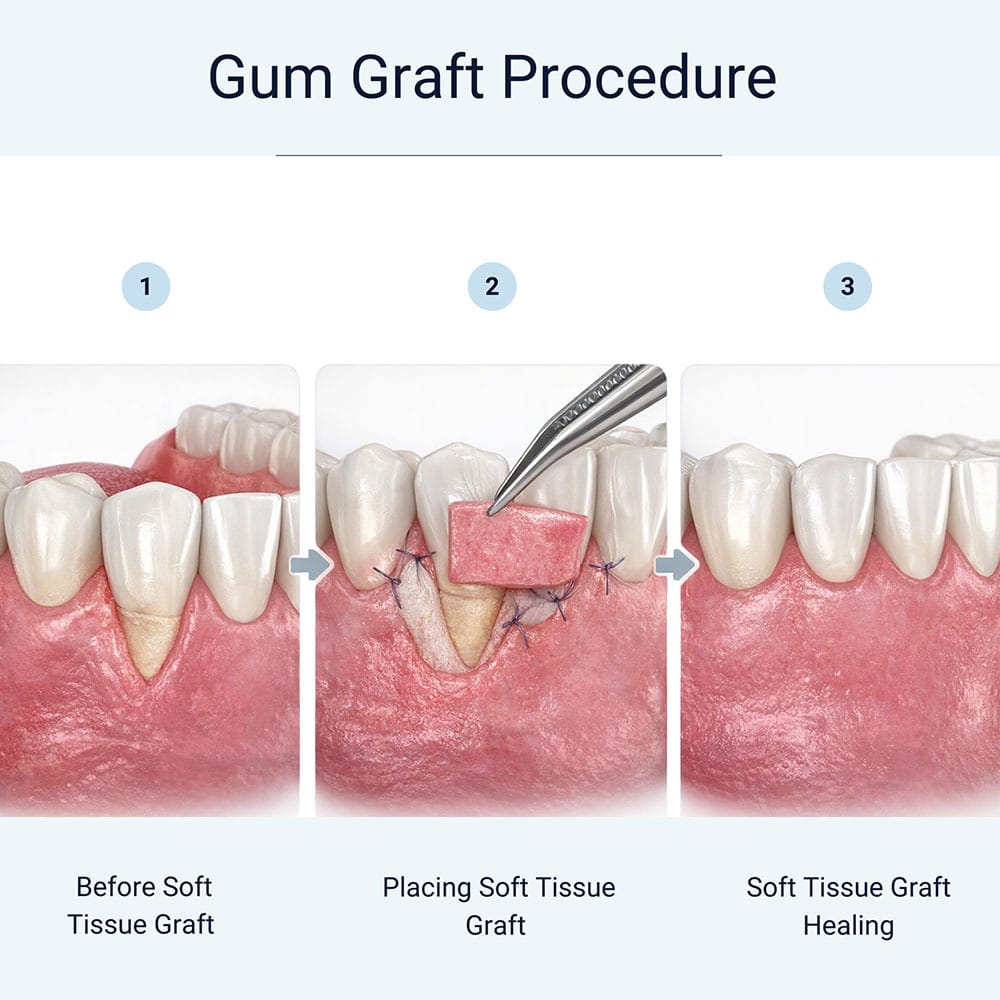
What Is a Gum Graft?
A gum graft is used to cover gums that have pulled away from your teeth, exposing the tooth roots. When tooth roots become exposed and lack the protection of gum tissue, it can cause unwanted sensitivity, tooth decay, and eventually, bone loss around the teeth.
In many cases, gum recession develops as a result of untreated gingivitis or early gum inflammation. Gum grafting is a specialized treatment that restores missing gum tissue. It is a very common periodontal procedure, as many people have receding or thinning gums.
Different Types of Gum Grafts
There are three different types of gum grafts available. The type recommended to you will depend on your unique oral health needs.
These different gum grafts are:
- Connective Tissue Grafts.
- Free gingival grafts.
- Pedicle grafts.
1. Connective Tissue Grafts
A connective tissue graft is the most likely graft that will be used to treat your exposed tooth roots. During treatment, a small flap of skin is created in the root of your mouth called the palate.
Tissue, called subepithelial connective tissue, is removed from underneath the flap. This tissue is stitched onto the gum around the exposed tooth root, and the flap in the roof of your mouth is stitched shut.
2. Free Gingival Grafts
A free gingival graft uses tissue taken from your upper palate in the roof of your mouth. However, instead of making a flap, the tissue is removed directly, including a top layer of the skin.
Once removed, the tissue is then attached to the gum requiring treatment. A surgical dressing is placed over the extraction site in your upper palate to allow for proper healing.
This technique may be recommended if you have thinner-than-average gums and require additional gum volume to enhance their appearance.
3. Pedicle Grafts
A pedicle graft uses gum taken from a nearby gum. During this treatment, a flap is created in the nearby gum, which is referred to as a pedicle.
The pedicle remains attached at one edge, allowing it to be pulled into place over the exposed tooth root. Once the pedicle is in position, it is secured in place with stitches.
A pedicle graft is any suitable for people with ample gum tissue near the tooth requiring treatment.
Donor Tissue
Alternatively, we may suggest using grafting material from a tissue bank instead of removing it from the roof of your mouth. These tissues are extensively treated to ensure they are safe for use and can be used with proteins that help stimulate your body’s ability to grow additional tissue.
When you visit VitaDent for a gum graft in Sheepshead Bay, Brooklyn, we can discuss which option will best suit your needs.
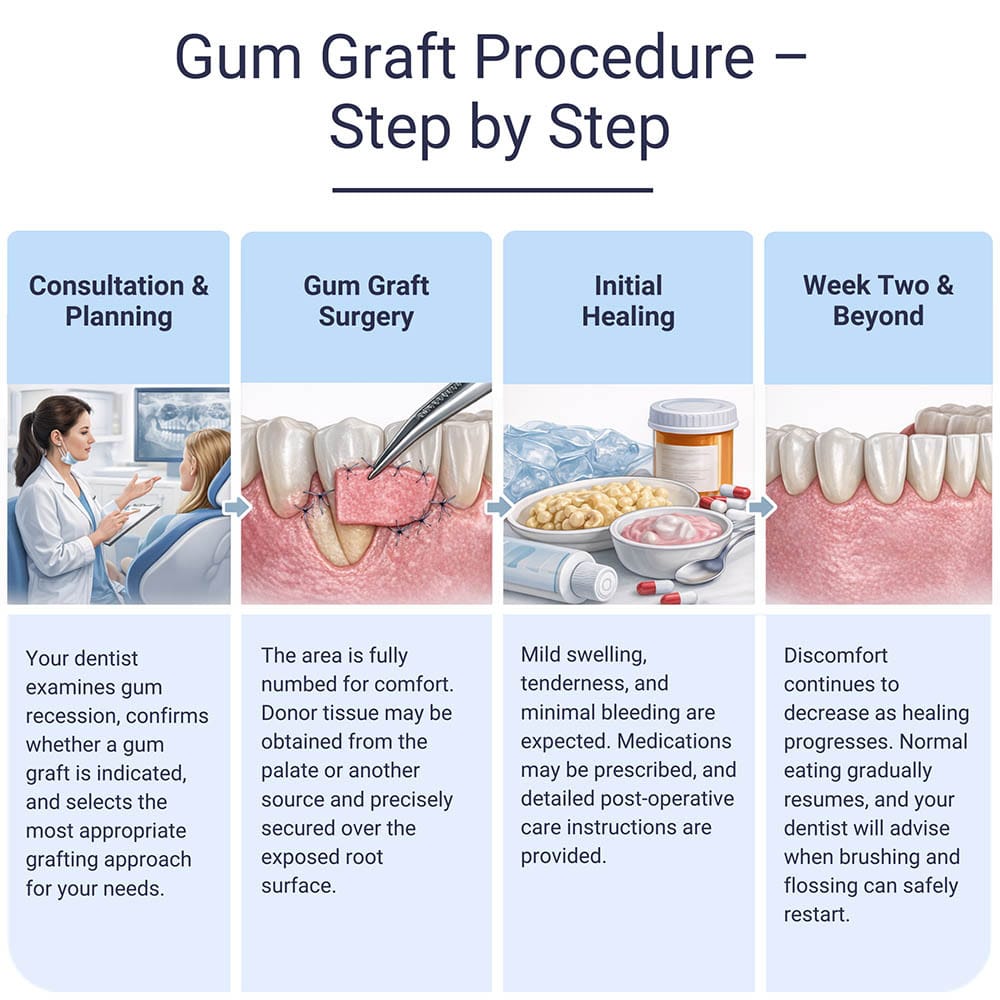
What to Expect During Your Gum Graft in Sheepshead Bay
Step One: Consultation & Treatment Planning
An initial consultation is necessary to determine whether a gum graft is required, and if so, to plan your personalized treatment. Dr. Igor Levin can discuss your recommended treatment plan in detail, including gum graft options, helping you make the right choice.
Step Two: Gum Graft Surgery
We ensure your mouth is fully numb before beginning surgery. If you feel anxious about this procedure, please ask us about sedation dentistry.
Once you are comfortable, we carry out the surgical procedure. If we are removing tissue from your upper palate, the incision will be stitched shut, or a surgical dressing will be placed. The new gum tissue will be stitched into position.
Recovery
Before you leave our dentistry office, we will provide you with precise instructions on how to care for your mouth and maintain its cleanliness, as well as inform you about what to expect during recovery. Below is a general outline of what you can expect.
Day One
It’s perfectly normal to experience some discomfort, bleeding, and swelling after a gum graft. If you have been prescribed medication, please take it as directed and ensure you get plenty of rest.
Keep your mouth clean with an antibacterial mouthwash and avoid brushing or flossing around the gum graft. You should be able to brush and floss your other teeth.
Choose soft, cooling foods like smoothies, yogurt, and soft puddings.
Week One
Any bleeding should cease within the first two days; however, the surgery site may remain swollen for three or four days afterward.
Continue avoiding brushing your teeth near the gum graft and take any pain or antibiotic medications as directed.
At this point, you should feel more comfortable incorporating a wider variety of foods into your diet, such as softly cooked vegetables, pasta, eggs, and fish.
Week Two
At this point, you should begin to feel much more comfortable, and any swelling should subside. You can begin to choose a wider range of solid foods, but it’s best to avoid anything very hard or crunchy, for example, anything containing nuts or seeds that could get stuck in your gums.
We can advise you when it is safe to resume brushing and flossing the gum graft as normal during a follow-up appointment.
Benefits of a Gum Graft
There are several benefits of having a gum graft, which include:
- Improving the appearance of your teeth.
- Decreasing tooth sensitivity.
- Reducing your risk of periodontal gum disease.
- Reducing your risk of tooth decay as exposed tooth roots are more likely to develop cavities.
Are there Any Risks with Gum Graft Surgery?
Most gum grafts are highly successful, but complications can occur rarely.
These can include:
- Infection.
- Gum graft failure.
- Bleeding.
It is very rare for a gum graft to fail, but if it does, then it begins to look white, which can indicate it has lost its blood supply.
If you have a gum graft and experience any symptoms, such as excessive bleeding, or develop a fever or notice signs of pus at the surgery site, please get in touch with us immediately so we can assist you.
When to Consider a Gum Graft
Gum recession is a problem that occurs gradually, and many people don’t notice that their gums have started to recede until the tooth roots become exposed. By this stage, gum recession can cause other problems, such as increased tooth sensitivity, and it can also appear unsightly.
It’s worth finding out more about gum grafting if you have noticed your teeth look longer than before or that eating hot and cold foods is increasingly uncomfortable. Receiving treatment can help protect your oral health and is a worthwhile investment in the long term.
Gum grafting is also sometimes recommended before or alongside placing an implant restoration, helping ensure there’s enough healthy tissue to support the implant for years to come.
FREQUENTLY Asked Questions
Will a Gum Graft Hurt?
The gum graft surgery will not feel painful as we ensure your mouth is fully numb. Afterward, you may experience some discomfort, but we can provide a prescription for pain relief to ensure you feel more comfortable. You should not feel excessive pain.
How Long Will It Take to Recover after Gum Graft Surgery?
Usually, gum graft surgery recovery takes a week or two, but everyone’s experience will be different. If you had multiple gums treated, your recovery may take a bit longer.
How Soon Can I Get Back to Normal Activities?
It is best to avoid any strenuous exercise for at least a week after surgery. This is because it can increase your heart rate, increasing the risk of bleeding, discomfort, and swelling.
You should be okay to return to work within a couple of days, but we can provide you with more precise information based on your treatment plan.
Is It Worth Having a Gum Graft?
Gum graft surgery has a high success rate and can help you combat advanced gum recession, protecting your dental and general health. Without treatment, your risk of developing gum and tooth problems in the future, or losing teeth, is higher.
Don’t let gum recession affect your smile or oral health. Contact VitaDent Brooklyn Dental Group or visit our office on Avenue X in Sheepshead Bay, Brooklyn (11235) to schedule a consultation and learn how a gum graft can strengthen and rejuvenate your gums.