
Table of contents
VITAdent offers deep dental cleaning in Sheepshead Bay for patients with mild to moderate periodontal disease. Also known as scaling and root planing, this treatment removes bacteria and tartar from below the gumline, helping stop infection and restore your gum health.
What Is a Deep Cleaning?
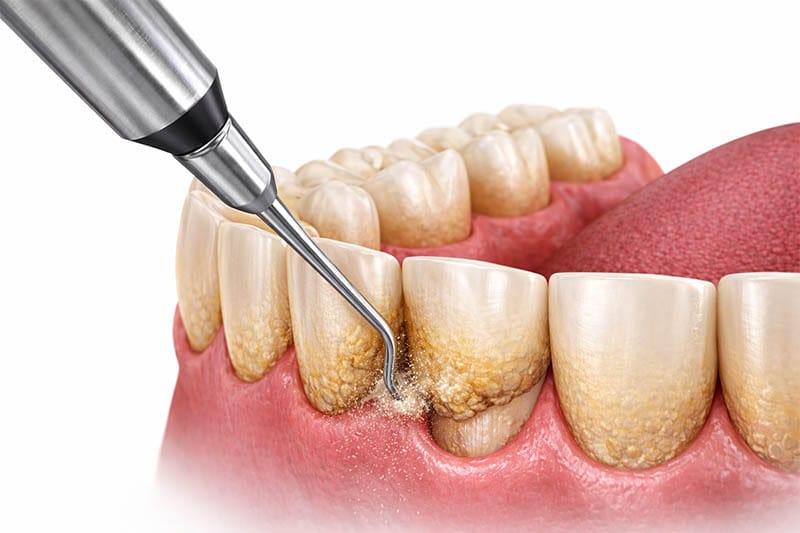
The idea of a deep dental cleaning is to remove the bacteria found in dental plaque and tartar, thereby helping to eliminate the infection and inflammation caused by periodontal disease.
A deep cleaning will clean your teeth and below your gum line. During treatment, scaling removes plaque and hardened dental plaque, also known as tartar or calculus, from above the gums.
Root planing is a process to clean the tooth roots that are exposed due to gum recession. It removes plaque and tartar buildup from below your gum line and smooths these surfaces, so it is harder for more plaque and tartar to build up afterward.
The Difference between a Deep Cleaning and a Regular Dental Cleaning
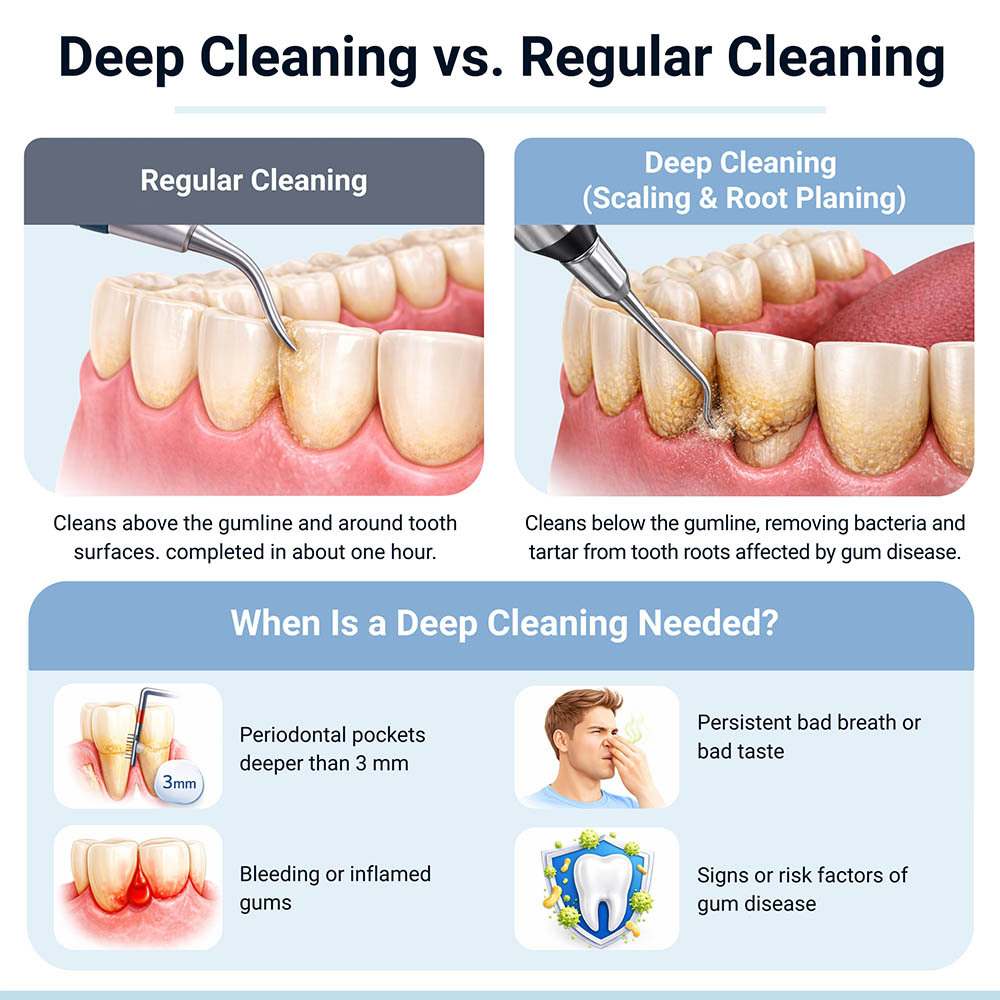
There are similarities between a deep cleaning and a regular hygiene appointment, but the main difference is that a deep dental cleaning cleans below the gums, removing the surfaces of tooth roots exposed due to periodontal disease.
In comparison, a regular dental cleaning only cleans teeth above the gums and just around the gum line. With this type of cleaning, you wouldn’t normally need a local anesthetic. We may recommend local anesthesia to keep you more comfortable during a deep cleaning.
When Is a Deep Cleaning Necessary?
When you have periodontal disease, it causes gum recession, where your gums gradually pull away from your teeth, creating pockets around them called periodontal pockets. These pockets can be tricky to keep clean and harbour inflammation and infection.
While periodontal pockets indicate gum infection, an infection inside the tooth itself may require a different treatment, such as a root canal procedure. Both conditions can cause symptoms, but they affect different tissues.
We may recommend a deep dental cleaning in Sheepshead Bay if you have symptoms of periodontitis, which can include:
- Periodontal pockets deeper than 3 mm.
- Gums that bleed easily and are fragile.
- Persistent bad breath or an unpleasant taste.
- If you have risk factors for periodontal disease.
What Our Patients Say About Us?
Deep Dental Cleaning Process Step-By-Step
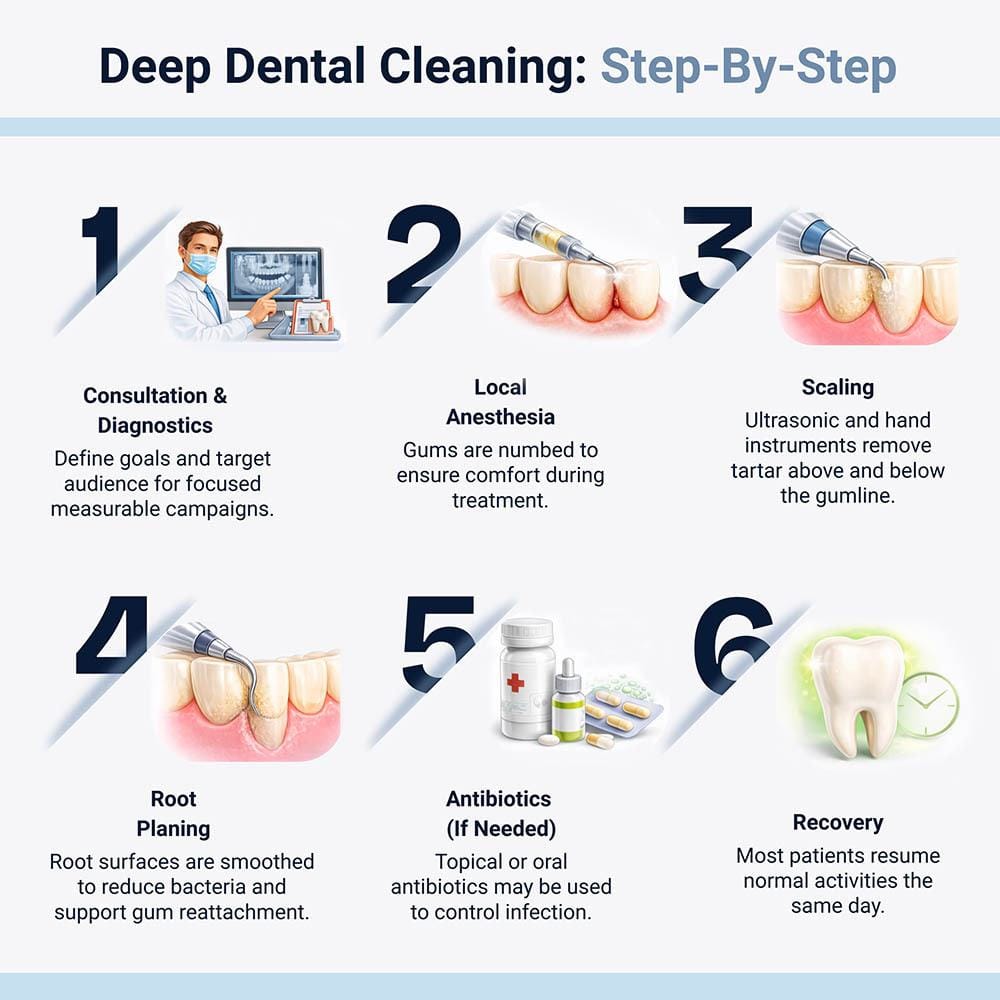
The procedure is straightforward and similar to a typical hygiene appointment, but may take longer to complete. We might clean your entire mouth during a single visit, or we may clean it over two or more appointments. It depends on the level of infection and inflammation, your oral and overall health, and your preferences.
Step One: Consultation & Diagnostics
An initial consultation with our dentist Igor Levin will identify if this procedure is necessary. During the consultation, digital dental X-rays will be taken to identify any bone loss around your teeth. Your gums will be gently probed and measurements taken to assess the degree of infection.
Step Two: Numbing Your Gums
We will numb your gums with a local anaesthetic before we begin. This is to ensure you feel comfortable during the treatment.
Step Three: Scaling Your Teeth
Ultrasonic instruments are used to loosen tartar from your teeth and below your gum line. Once loosened, we use specialized hand tools to scale or scrape tartar from your teeth.
Step Four: Planing Your Teeth Roots
After your tooth roots are cleaned, the surfaces are slightly rough, so we smooth or plane them to a smooth finish. Smoothing these tooth roots helps your gums adhere to the tooth roots more easily and makes it harder for plaque and tartar to build up on the smooth surfaces.
Step Five: Antibiotics
Not everyone will need antibiotics, but if necessary, we may place them topically around your tooth roots or prescribe oral antibiotics to take afterward.
If we prescribe antibiotics, please take the entire course, as they will help eliminate a more severe bacterial infection.
Step Six: Recovery
Many people can return to everyday activities on the same day as treatment. This procedure is minimally invasive, as it requires no incisions; therefore, no stitches are needed.
You should be able to eat and drink whatever you wish, so long as it feels comfortable. We can provide more specific instructions tailored to your unique oral health needs during your visit to our Sheepshead Bay dental office. Following these guidelines closely will help you recover more quickly.
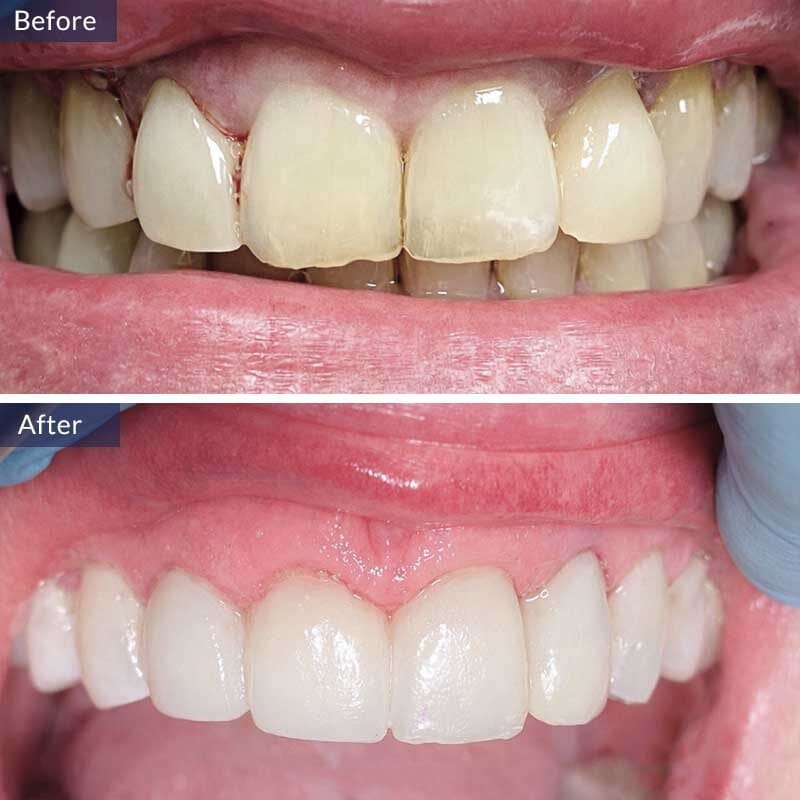
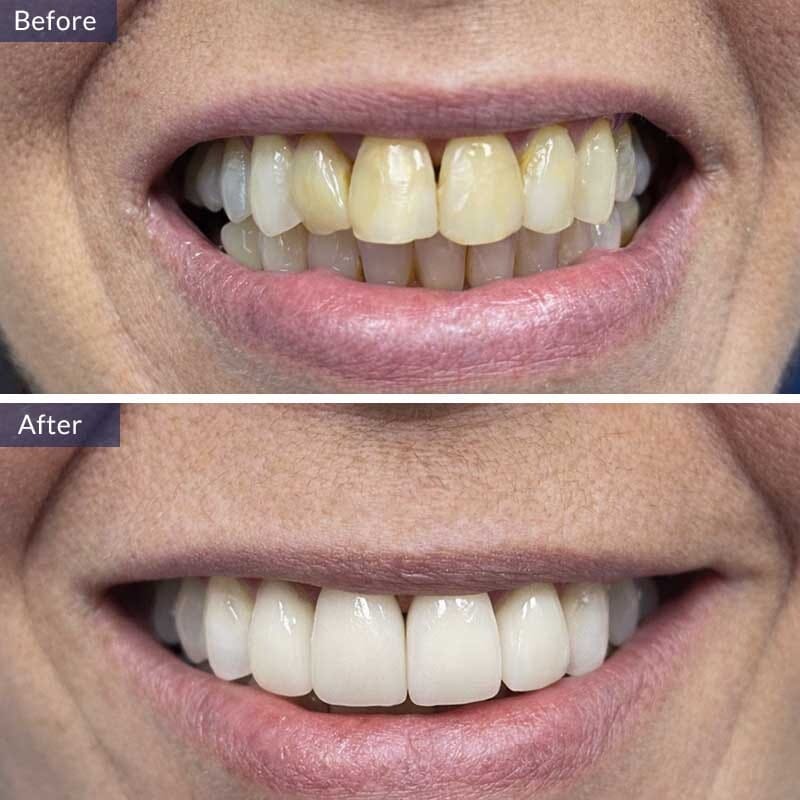
See Before & After Results
Using Laser Dentistry to Treat Periodontal Disease
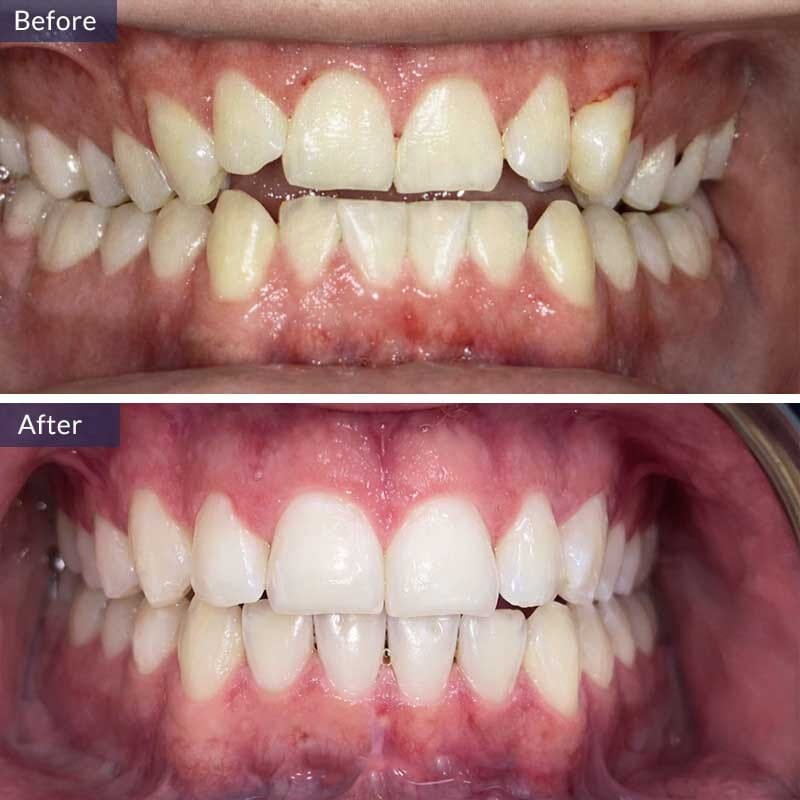
We may combine your deep cleaning treatment with laser dentistry. Using a dental laser during this treatment is a minimally invasive and gentle process. Laser dentistry helps sterilize the gums, killing bacteria and minimizing side effects such as bleeding and swelling afterward.
Laser dentistry can be highly effective in treating more severe bacterial infections in the gums.
Benefits of a Deep Dental Cleaning
A deep cleaning in Sheepshead Bay can provide the following benefits:
- Eliminate bad breath by getting rid of the bacteria that cause halitosis.
- Prevent tooth loss and further gum recession.
- Reduce the risk of your periodontal disease progressing, which will happen without treatment.
- Protects your overall health by getting rid of harmful bacteria that can enter your bloodstream and travel to other parts of your body. Because a deep cleaning reduces the number of harmful bacteria, it helps protect your general health.
Are There Any Risks Associated with a Deep Dental Cleaning?
This is a low-risk and effective procedure, and complications are very rare.
However, potential risks can include:
- Tooth sensitivity can occur after plaque and tartar are removed from your teeth, but should disappear within a month or two.
- Teeth can feel looser immediately after treatment, but as your gums shrink and fit more snugly around your teeth, they should feel more stable and stronger.
- Gum recession can occur, as swollen gums will shrink after treatment, potentially exposing more of your tooth roots.
- Tenderness can occur for the first two days after treatment but should be controllable with over-the-counter pain relief.
- Bleeding after a deep dental cleaning is normal, but it shouldn’t be excessive. If this continues, please get in touch with us so we can assist you.
Periodontal Maintenance Program
We will likely want to see you a short while after your deep cleaning to assess the results of the treatment. We will be looking for signs that the infection is gone and that your gums have begun to fit more snugly and tightly around your teeth.
Some people may only need a single deep teeth cleaning in Sheepshead Bay, Brooklyn. Others may require a series of treatments to control more severe periodontal disease.
Maintaining the Results at Home
Periodontal disease is often the result of poor oral care, so after completing your scaling and root planing treatment, it’s important to commit to a good daily dental care routine. We can help you and will work with you to devise a dental care routine that is easy to follow, helping to keep your teeth and gums clean and healthy.
Ongoing Professional Dental Maintenance
If you require an ongoing maintenance program, you might need deep cleaning appointments every three or four months. It is essential to stick to any recommended treatment plan as it will help prevent the disease from recurring or worsening.
Whether you need a single deep cleaning or an ongoing maintenance plan, VITAdent Brooklyn Dental Group is here to protect your gums and your smile. If you are looking for deep dental cleaning in Sheepshead Bay, contact us today to schedule a consultation at our Avenue X office in Brooklyn, 11235.