
Table of contents
Missing teeth, gum disease, or past injuries can cause your jawbone to deteriorate, leaving it too weak to support a new tooth. If you’ve been told your jaw lacks the necessary density, our team performs a precise bone graft in Sheepshead Bay to rebuild it. At VITAdent, we use this procedure to restore foundational strength, ensuring optimal success before moving forward with your dental implant surgery.
What Is a Bone Graft?
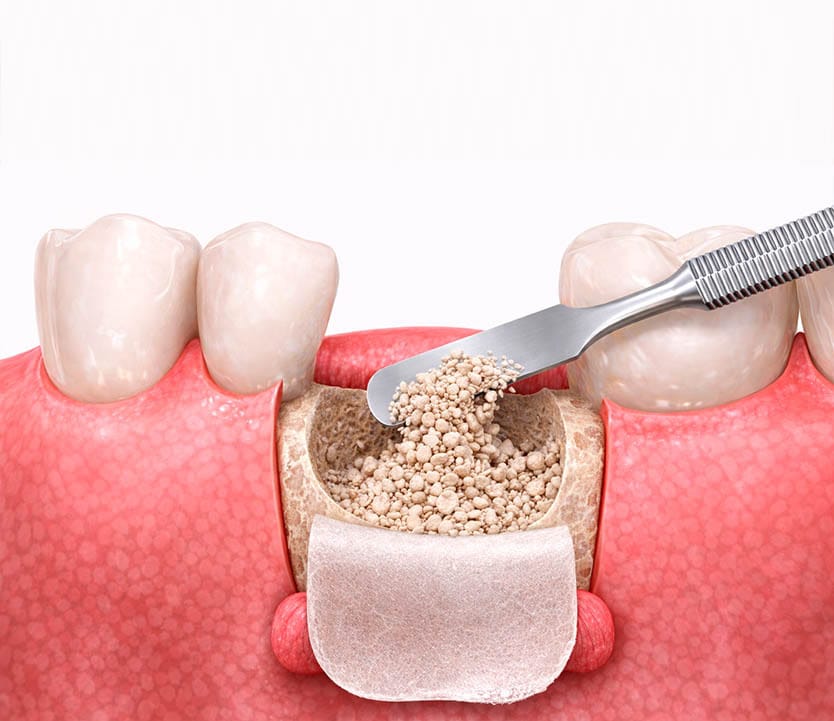
A bone graft is a surgical procedure to increase the density and volume of your jawbone. During this treatment, bone grafting material is added to areas where your jawbone is deficient.
These bone grafting materials act as a scaffold or matrix, holding open the right amount of space in your jaw and encouraging your body to produce new bone. As this new bone regenerates, it gradually replaces the bone graft.
Different Bone Grafting Materials
Several types of bone grafting materials are available, including the following.
1. Allograft
An allograft is a human donor bone that is purchased from a specialized tissue bank. It is extensively treated and sterilized to ensure it is safe for use.
2. Autogenous
An autogenous dental bone graft uses bone taken from your own body. This is usually done during a separate step in the procedure. Because the bone comes from you, the risk of rejection is very low.
3. Alloplast
Alloplast dental bone grafts utilize artificial bone manufactured in a laboratory. These bone grafts contain substances such as hydroxyapatite, a naturally occurring mineral found in bone.
4. Xenograft
A xenograft uses animal donor bone. The bone is typically porcine or bovine and, like an allograft, is extensively processed and sterilized to ensure it is safe for use. When you visit VitaDent, we can discuss which type of bone grafting material is the best option in your specific case.
When Is a Bone Graft Needed?
There are several situations where we may recommend you consider a dental bone graft in Sheepshead Bay, including:
- To increase the volume and width of your jawbone.
- To build up the volume and width of the jawbone around your maxillary sinuses, below your eyes, and on either side of your nose.
- To provide better retention for traditional dentures.
- To stabilize loose teeth.
- To treat jawbone loss due to trauma or advanced gum disease.
- To preserve the tooth socket after a tooth is extracted.
What Are the Different Types of Bone Grafting Treatments?
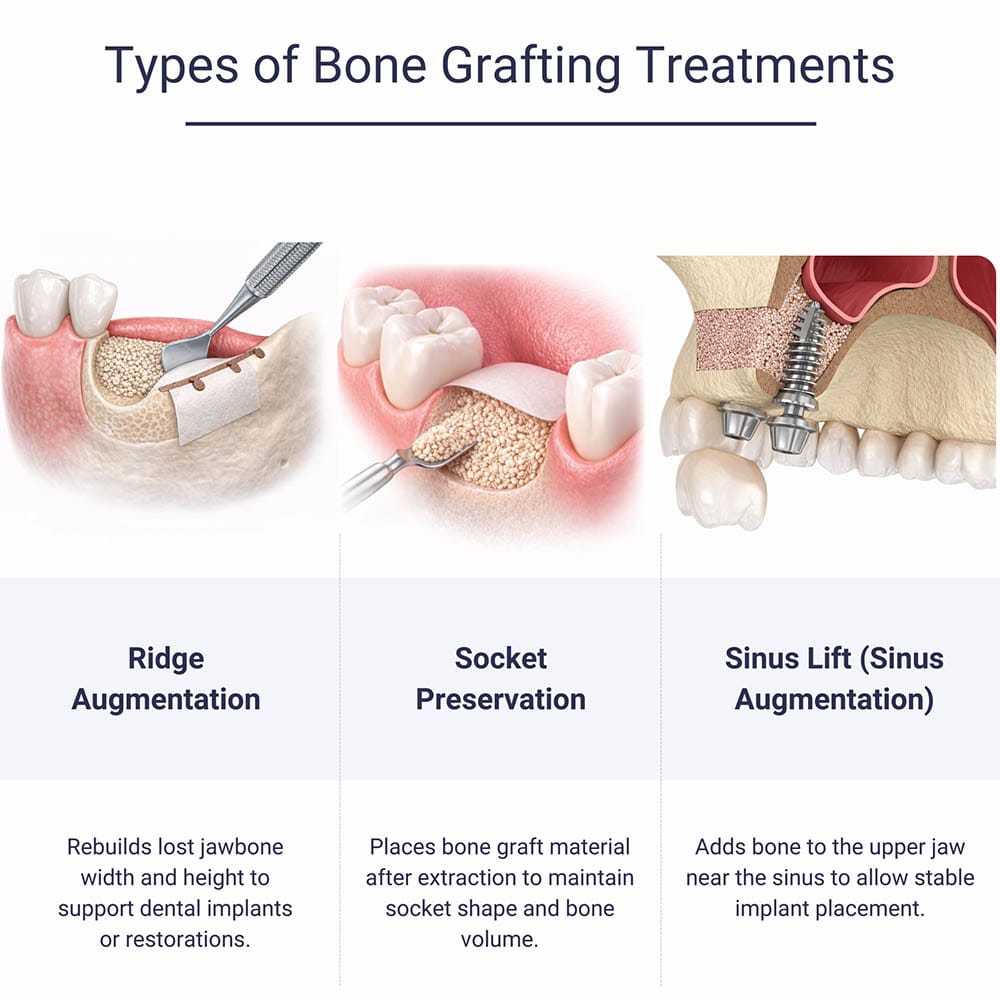
Our team at VitaDent offers several bone grafting treatments, including:
- Ridge augmentation.
- Socket preservation.
- Sinus lift or augmentation.
Here is how each option differs from the other:
1. Ridge Augmentation
A ridge augmentation increases the width and volume of the alveolar bone, the ridge of bone that originally supported your natural teeth. This can diminish after tooth loss, and replacing it helps provide better support for dental implants or a denture.
2. Socket Preservation
After a tooth is extracted, we suggest packing the empty socket with bone grafting material. This helps protect and preserve the socket shape after an extraction, which may be necessary when a tooth cannot be restored with root canal therapy.
3. Sinus Lift
A sinus lift is a more advanced oral surgical procedure that focuses on increasing the quantity and quality of bone near your sinuses.
For more detailed information, please visit the page dedicated to sinus lift treatment.
The Bone Grafting Procedure Step-By-Step
Your dental bone graft is a custom treatment, so the procedure outlined below serves as a general guide of what to expect.
Step One: Consultation and Treatment Planning
The first step is to assess your jawbone for any areas of deficiency. During the consultation, Dr. Igor Levin examines your mouth and takes diagnostic images, including a cone-beam CT scan. The CT scan creates a 3D view of your jaws and teeth, allowing an accurate evaluation of bone levels and any areas that may need grafting.
It also helps determine how much grafting material may be required. Your dental and medical history are reviewed as well to ensure the procedure is safe and appropriate for you. Based on this information, a personalized treatment plan is created, outlining the recommended approach, estimated timeline, and cost.
Step Two: Bone Graft Surgery
- Before treatment begins, your mouth is fully numbed, and if you have opted for sedation dentistry, then this is provided now.
- A small incision is made into your gum so your gum tissue can be moved away from your jawbone. The jawbone is cleaned and disinfected, and appropriate bone grafting material is added to the jawbone.
- Once the bone grafting material is in place, it is covered with a membrane. The membrane protects the bone grafts and prevents your gum tissue from growing into it. It will most likely be resorbed during the healing process.
- Your gums are repositioned, and the incision is stitched shut.
Recovery
Once your gum grafting surgery is complete, we provide detailed information on what to expect during recovery, including what to eat and how to care for the surgery site.
We may prescribe antibiotics; if so, please take the entire course of medication. Discomfort can usually be managed with over-the-counter pain relief, or we can prescribe a stronger medication.
Normal side effects include minor swelling and bruising afterward; the surgery site may also feel tender. These side effects should disappear within a week or two. Using ice packs can help reduce swelling more quickly.
It is perfectly normal to notice small grains of bone graft material emerging from the surgical site for the first few days. These may appear to be small grains of salt, but they are not a cause for concern. If you feel that you are losing a larger amount of bone grafting material, please get in touch with us so we can assist you.
Choose soft foods for the first few days and avoid smoking and drinking alcohol during the healing period.
Benefits of Bone Grafts
A bone graft in Sheepshead Bay, Brooklyn, can make it easier to have successful dental implant treatment. It can improve overall aesthetics by providing better support for the muscles in your cheeks and lips. Treatment can restore your jawbone after gum disease, trauma, or tooth loss, and may be combined with periodontal procedures like laser gum surgery for optimal gum and bone health.
Are There Any Risks of Dental Bone Grafts?
We carefully evaluate patients before recommending a bone graft to ensure the treatment is as safe and successful as possible.
However, any form of oral surgery carries a low level of risk, which can include:
- Infection.
- Prolonged bleeding.
- Nerve damage.
There is also a small risk that the bone graft could fail, especially if you have any medical conditions affecting your immune system or smoke.
FREQUENTLY Asked Questions
How Long Is Recovery after a Dental Bone Graft?
Initial recovery can take one to two weeks, but the bone grafts will take longer to heal completely. A small bone graft may heal within three months, while a larger bone graft could take up to a year.
How Long Will a Bone Graft Last?
A dental bone graft can last many years or for life, but your jawbone needs stimulation to maintain it. Therefore, if you intend to have dental implants after a bone graft, it’s best to have them sooner, as otherwise there is the risk that your bone graft could begin to diminish and resorb.
How Soon Can I Get a Dental Implant after Bone Grafting?
It depends on your unique oral health needs, general health, and the size of the bone graft required.
Sometimes, we may recommend waiting until a larger dental bone graft has fully healed before inserting an implant. If you only require a minimal amount of bone grafting material, it might be possible to insert the implant at the same time as bone grafting surgery.
We will recommend a timeframe that we believe will provide an optimal treatment outcome.
If you’re considering a dental bone graft, an experienced team of dentists at our Sheepshead Bay dentistry center offers safe, effective treatment to restore your jawbone and prepare for implants. Our experienced dentists ensure every procedure is personalized for lasting results. Contact us today at (718) 766-0002 or visit our office on Avenue X in Sheepshead Bay, Brooklyn (11235) to schedule your consultation.