
Table of contents
Gingivitis is the first stage of gum disease, and the good news is that it’s fully reversible with the right professional care and better habits at home. At VITAdent, we provide gingivitis treatment in Sheepshead Bay, Brooklyn, combining a thorough exam with a personalized plan to restore healthy gums before the condition can progress.
What Is Gingivitis?
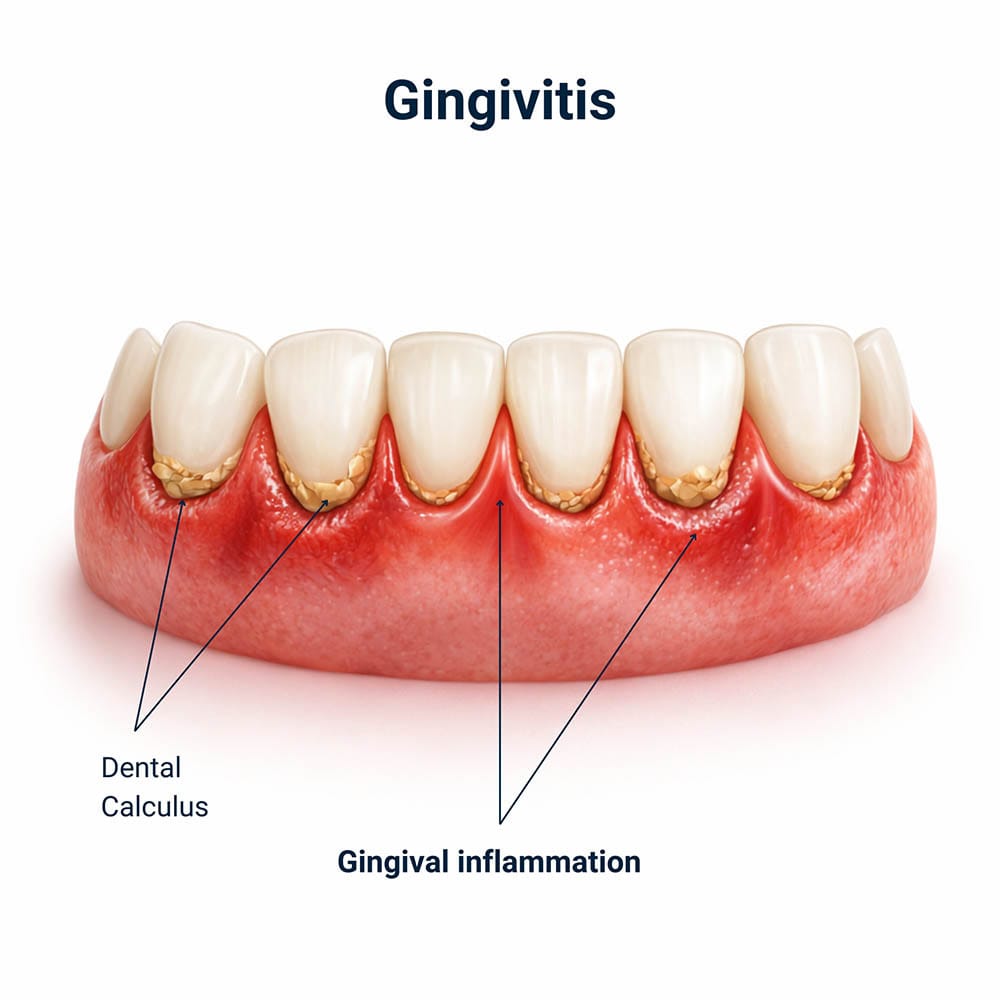
Gingivitis is an early stage of gum disease. It is caused when dental plaque builds up over your teeth and gums. Dental plaque contains harmful bacteria that produce toxins, leading to infection and inflammation in the gums.
What Can Cause Gingivitis?
Usually, gingivitis is caused by poor oral hygiene, but other factors include:
- Diabetes makes it harder to fight gum disease, and having gum disease can increase the risk of developing diabetes.
- Smoking constricts blood vessels in your gums, making it harder to fight infection and inflammation.
- Hormonal changes during puberty, pregnancy, and menopause increase your gums’ sensitivity to plaque bacteria.
- Dry mouth, as a lack of saliva allows harmful bacteria to thrive.
Symptoms of Gingivitis
Signs that your gums are infected and inflamed include:
- Red, puffy gums.
- Gums that bleed when you brush and floss.
- Increasing gum sensitivity.
- Gum recession.
- Bad breath.
The Importance of Treating Gingivitis Early
Gingivitis is reversible with the right treatment. In comparison, periodontitis or advanced gum disease is not.
Leaving gingivitis untreated means it can progress and gradually worsen. It can lead to loss of gum and jawbone tissue. In more advanced cases, gum graft surgery may be needed to restore receded tissue and protect exposed tooth roots.
When you treat gingivitis early, it’s more cost-effective as the treatment is quite straightforward. Early treatment is quicker, saving you time. Gingivitis treatment is also minimally invasive and more comfortable compared with more advanced treatments for severe periodontitis.
If you suspect you have gum disease, schedule an appointment with us as soon as possible. The sooner we can diagnose and treat your gingivitis, the better the long-term outcome will be.
Please don’t ignore early warning signs, such as blood on your toothbrush or in the bathroom sink.
What Our Patients Say About Us?
Gingivitis Treatment Options
Several treatment options exist, depending on the severity of your gingivitis. These treatment options include:
Professional Dental Cleaning (Prophylaxis)
Mild gingivitis can be treated with a professional dental cleaning during a hygiene appointment. During this treatment, our hygienist will assess your teeth and gums before professionally cleaning your teeth.
During a prophylaxis, ultrasonic tools are used to loosen tartar or calculus buildup before it is scraped or scaled away using specialized hand tools.
Once all tartar is removed, your teeth are polished. The smoother surface makes it harder for more plaque to adhere.
Scaling and Root Planing (Deep Dental Cleaning)
A scaling and root planing treatment is used for more advanced cases. It is designed to deep clean your teeth and gums, taking the cleaning process to just below your gum line, removing where plaque and tartar build up.
The process also cleans tooth roots that are exposed due to gum recession. After they are cleaned, they are planed or smoothed. This makes it easier for gums to fit more snugly around your teeth and harder for more plaque and tartar to build up.
Oral Care Instruction
After your teeth are cleaned, your hygienist can work with you to improve your oral care routine at home. They can demonstrate how to brush and floss thoroughly, which can be extremely useful.
Many people brush and floss without thinking, and as a result, miss out on areas of their teeth or don’t use the best techniques. Your hygienist can also discuss other tools to try that may work more effectively for you. For example, if you find flossing awkward, you may wish to try interdental brushes or a WaterPik instead.
Recommendations for Caring for Your Teeth and Gums at Home
After receiving treatment for gingivitis in Sheepshead Bay, it’s essential to commit to a good oral care routine at home. It isn’t difficult or time-consuming, and below is a summary of the information you will most likely receive from our hygienist.
- Brush your teeth at least twice a day with a soft bristle toothbrush, for at least two minutes every time, taking care to cover all tooth surfaces.
- Floss daily, or choose another method to clean between your teeth as plaque and food debris can build up in these areas, increasing your risk of gum disease.
- If recommended, use a therapeutic mouthwash, for example, an antibacterial or fluoride mouthwash to help support good gum health.
- Consider using an electric toothbrush or a WaterPik to help improve your oral care routine, especially if you have any problems manipulating a manual toothbrush or ordinary dental floss.
- Choose healthy foods that support good gum health and try to avoid snacking between meals, especially on sugary and starchy foods that feed harmful bacteria in dental plaque.
Gingivitis Treatment Step-By-Step
When you visit our dental center, we can diagnose and treat gingivitis promptly.
Step One: Reviewing Your Dental and Medical History
Dr. Levin will review your dental and medical history to identify any risk factors that may increase your likelihood of developing gingivitis.
Step Two: Dental Exam
A dental exam will soon identify any buildup of plaque and tartar, as well as any signs of gum irritation and swelling.
Step Three: Periodontal Probe & X-Rays
A periodontal probe is used to measure the pocket depth between each tooth and its surrounding gum. It is gently inserted into your gum, and the measurements are recorded.
If your gums are healthy, pocket depths generally don’t exceed 3 mm. If the readings are four millimeters or more, it can indicate gingivitis.
Digital dental X-rays allow Dr. Levin to check the bone levels around your teeth in areas where you have deeper periodontal pockets.
Step Four: Additional Tests If Needed
If a medical condition may be contributing to your gum disease, Dr. Levin may recommend that you consult your healthcare provider for further evaluation.
Otherwise, you will receive a custom plan for your gingivitis treatment in Sheepshead Bay, Brooklyn.
FREQUENTLY Asked Questions
Is Gingivitis Painful?
Gingivitis generally does not cause any pain or discomfort, which is why the early signs are easy to ignore.
How Long Will It Take to Reverse Gingivitis?
You may be able to reverse gingivitis in a matter of weeks. A professional dental cleaning, combined with a better oral care routine at home, will gradually lead to healthier and stronger gums.
Can I Treat Gingivitis at Home?
You will likely need professional dental care to treat gingivitis successfully and to reverse it completely. Most people will need to have their teeth professionally cleaned to remove plaque and tartar buildup that causes this infection and inflammation.
Is Gingivitis Treatment Covered by Dental Insurance?
Almost certainly, yes. Your dental insurance will likely cover regular hygiene appointments and deep dental cleanings to help you maintain good gum health.
Don’t ignore the early warning signs of gum disease. We offer fast, non-invasive gingivitis treatment in Sheepshead Bay to stop gum disease before it progresses and prevent larger dental issues down the road. Our experienced team of top dentists at VITAdent specializes in personalized care that brings your gums back to full health. Reach out to schedule an appointment, or visit our office on Avenue X in Sheepshead Bay, Brooklyn (11235) to take control of your oral wellness.