
Table of contents
VITAdent offers root canal treatment in Sheepshead Bay to help you avoid tooth extraction if you have persistent pain or an infected tooth. If left untreated, the infection can damage the surrounding bone. If this has happened to your tooth, contact Dr. Igor Levin to determine the best endodontic treatment to save it. This is a routine procedure in which the damaged tissue inside the tooth is removed, the area is cleaned, and the tooth is filled.
What Is Root Canal Treatment?
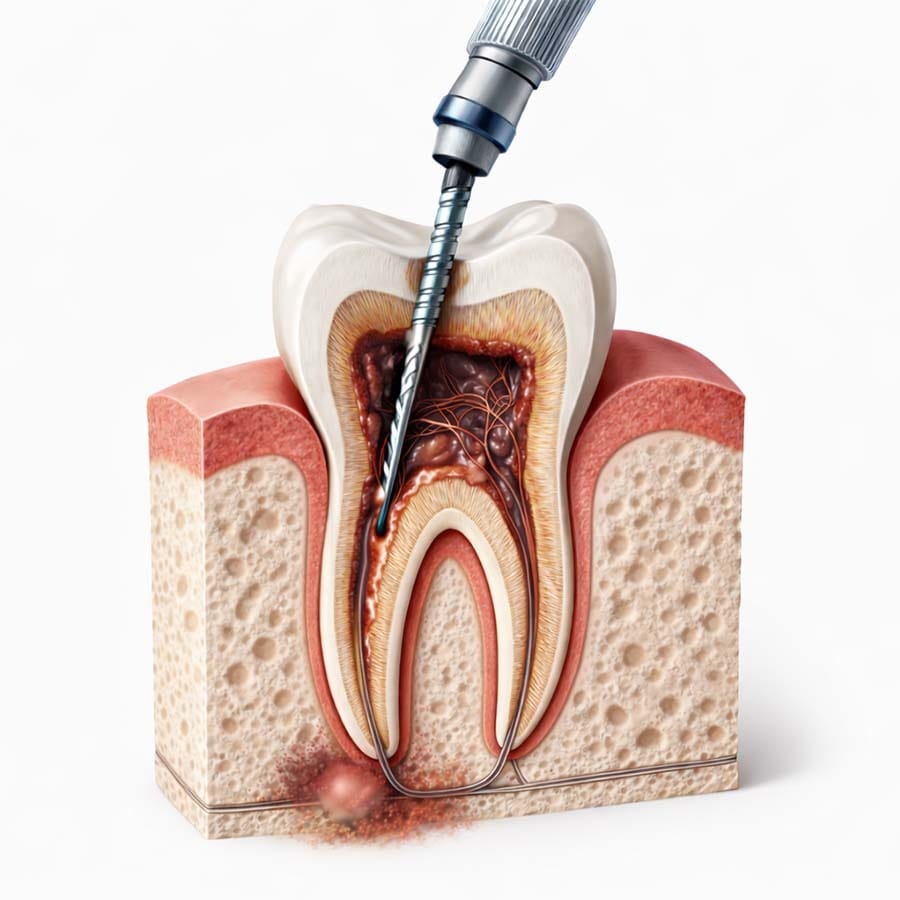
Root canal treatment is necessary when the innermost part of the tooth, known as the dental pulp, becomes inflamed or infected.
The pulp is in the center of your tooth in the pulp chamber. It consists of a collection of tissues that include blood vessels, nerves, and connective tissues. These tissues extend into the root canals in your tooth roots.
Root canal therapy is a procedure that removes the dental pulp, including the tissues within the root canals. Once the pulp tissue is removed, your tooth is disinfected and permanently sealed.
Typically, a tooth that has undergone root canal treatment will require a dental crown afterward. This is because it is normally quite damaged and needs the protection provided by covering the tooth entirely with a crown.
Why Is Root Canal Treatment Needed?
Several issues that can result in an inflamed or infected dental pulp include:
- Severe tooth decay.
- A broken or severely cracked tooth.
- Repeated dental treatment on the same tooth.
How Does a Tooth Become Infected or Inflamed?
Your tooth has several different layers, and the outermost is a tough layer of enamel that protects the tooth. Underneath is a softer layer of dentin, consisting of tiny, tightly packed tubules that lead directly to the pulp chamber in your tooth’s center.
Suppose your tooth enamel becomes damaged in any way. In that case, bacteria naturally present in your mouth can penetrate the tooth and the dentin, eventually causing a cavity that reaches the dental pulp.
Sometimes, a dental pulp becomes inflamed if the tooth receives some form of trauma, such as a blow to the mouth. The inflammation causes the tooth pulp to swell, causing a condition called pulpitis. The swelling causes pressure to build up in the tooth, resulting in a nasty toothache.
The Signs You May Need a Root Canal
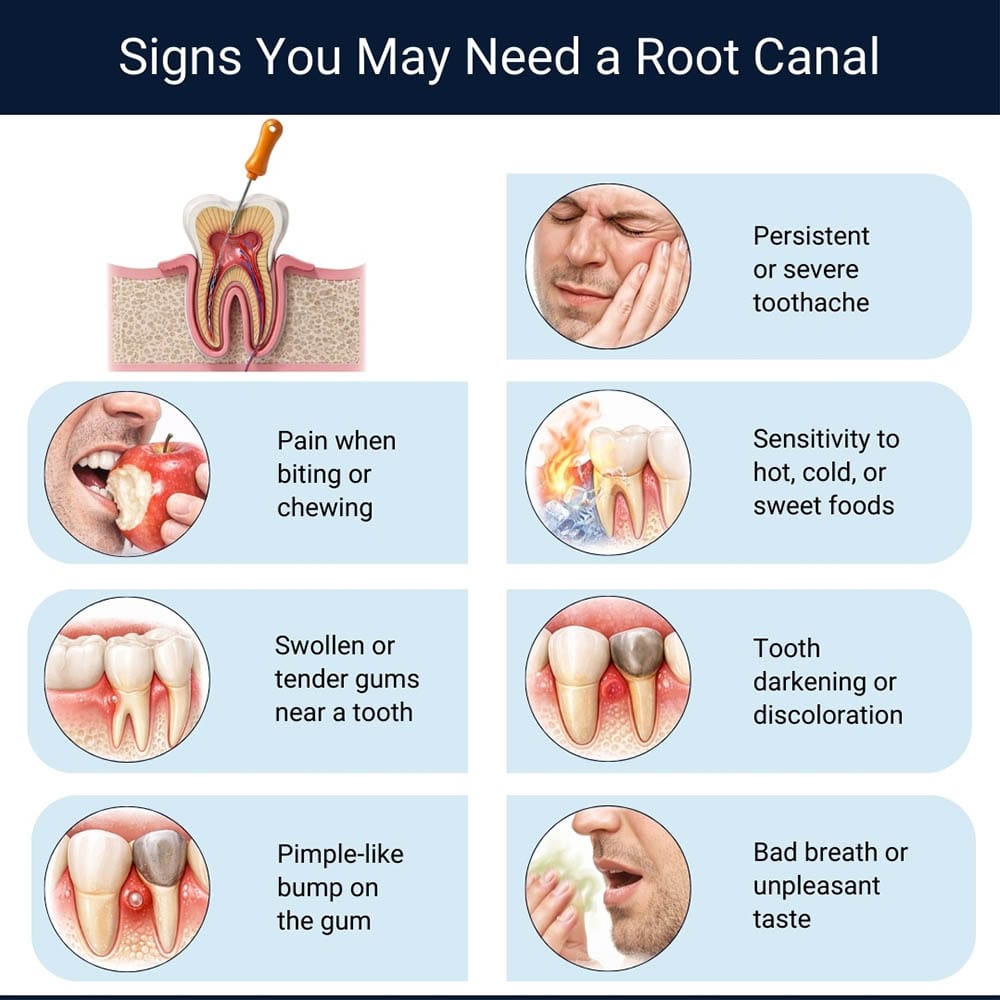
Several symptoms can indicate that the dental pulp has become infected or inflamed, including:
- A persistent toothache.
- Toothache or discomfort when you bite or chew on the tooth.
- Increasing sensitivity to hot, cold, or sweet foods.
- Tender or swollen gums around the infected tooth.
- Tooth discolouration so it starts to look darker than before.
- A pimple on the gum can develop when the infection is severe.
- Bad breath.
- A persistently unpleasant taste.
The most common sign is a severe toothache that is extremely unpleasant. Sometimes a toothache may disappear, which can occur if the tooth nerve dies. However, the infection will remain and can worsen without treatment.
A tooth infection cannot be cleared up without professional dental care, and you must see a dentist. If you don’t, there is a risk that you could develop a dental abscess, which is a more serious condition that may require the extraction of the tooth to allow the infection to drain.
In severe cases, the infection can affect overall health. At this point, you may have facial swelling, a fever, and start to feel very unwell and must seek emergency dental care.
What Our Patients Say About Us?
The Root Canal Procedure Step by Step
Your treatment will likely be spread over several appointments.
Step One: Dental Exam, Diagnosis & Dental X-Rays
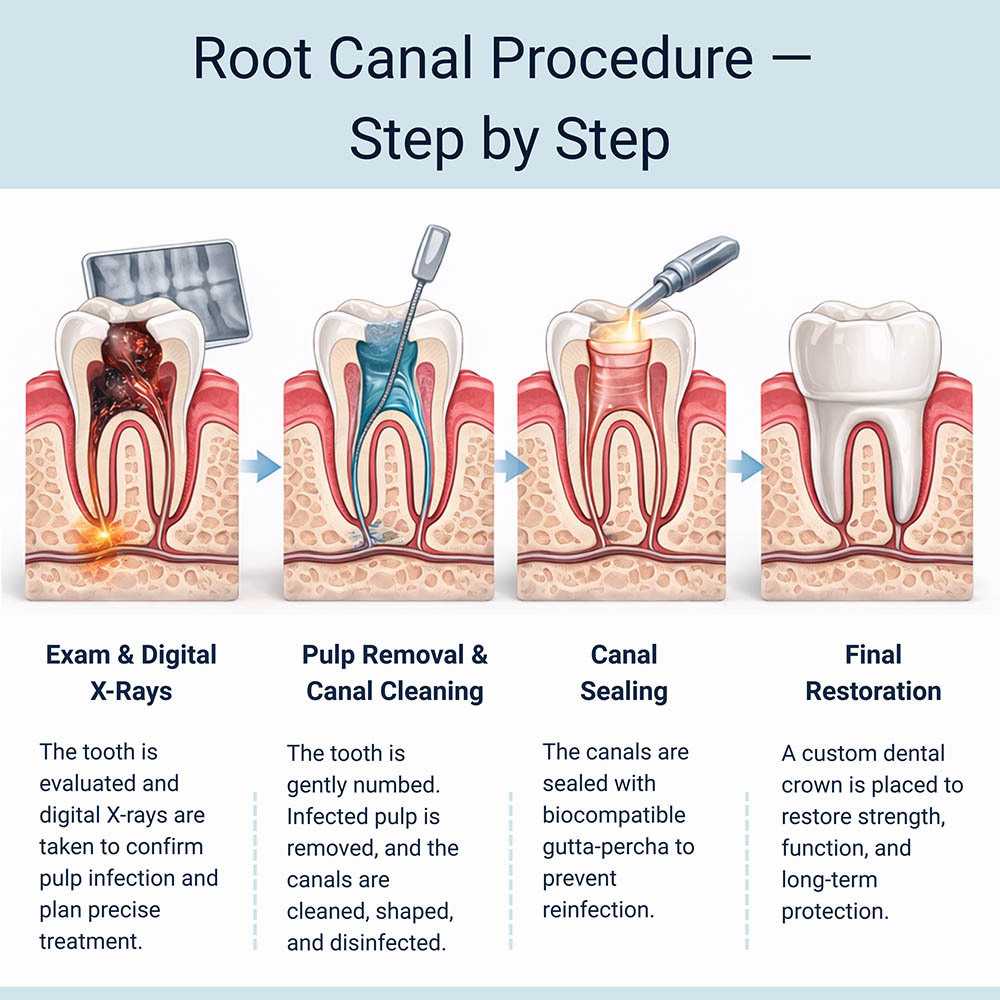
The first step is contacting our dental office, especially if you are experiencing severe tooth pain. Our team makes every effort to see patients in pain as soon as possible, preferably on the same day.
During your first visit, our root canal specialist will gently examine the tooth and perform tests, such as applying a cold stimulus, to check if the dental pulp is still vital. Digital dental X-rays will show the extent of the infection, allowing us to create an effective treatment plan.
Step Two: Removing the Infected Pulp
The tooth is numbed before treatment begins, so you will not feel any discomfort. The endodontist will make a small opening in the tooth to expose the dental pulp, carefully remove the tissue, and clean and shape the root canals using special files.
The tooth is then irrigated and disinfected. If the infection is severe, topical antibiotics may be inserted into the tooth to ensure all bacteria are eliminated.
Step Three: Sealing the Tooth
Once Dr. Levin is certain that all the infection has been removed, the tooth is sealed permanently with gutta-percha, a special filling material.
Step Four: Tooth Restoration
The final step is to restore the tooth. Usually, this will require a dental crown as an ordinary filling would likely not be large or strong enough to protect and preserve the tooth.
Our root canal specialist will carefully prepare the tooth before taking a dental impression, which is used to craft your custom restoration. If you prefer a same-day option, we can often design and mill your dental crown in Sheepshead Bay while you wait using our on-site CEREC system.
Otherwise, you will need to have a temporary crown while your permanent crown is made. You will return to our dental office for one more visit so that the new crown can be fitted once it is ready.
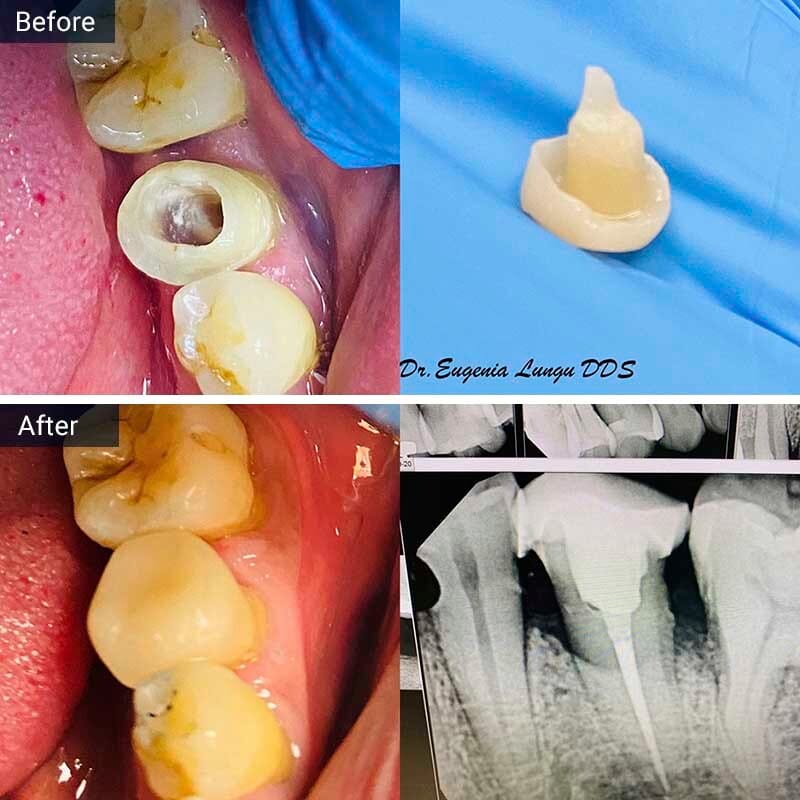
See Before & After Results
Benefits of Root Canal Therapy
This procedure is a safe, effective therapy. Your root canal treatment can provide several benefits, including:
- Eliminating tooth pain and discomfort.
- Eliminating any tooth infection.
- Saving your natural tooth.
- Restoring functionality and aesthetics to a tooth.
The only alternative to a root canal is tooth extraction, which we strive to avoid whenever possible.
Your natural teeth are always the best option, and removing a tooth leaves the question of how to replace it afterward. Instead, protecting and preserving it with root canal therapy can be far more cost-effective and quicker.
What to Expect after Root Canal Treatment in Sheepshead Bay
Root canal treatment will immediately relieve any toothache or pain, so the tooth should feel much more comfortable once the anaesthetic wears off. However, some sensitivity as the tooth settles down is normal. It can take several days or up to a week for this sensitivity to disappear.
It is best to avoid chewing on the tooth for several days after root canal treatment or to opt for foods that require minimal chewing. It is essential to maintain a good oral care routine to keep your mouth clean. We can advise you on how to clean around the tooth gently while it heals.
If you smoke, it’s better to quit for a few days because it can slow down the healing process.
Oral & Periodontal Procedures We Offer
FREQUENTLY Asked Questions
How Long Will a Root Canal Treatment Last?
Root canal treatment can be a long-term solution for tooth loss that is very cost-effective. Typically, a tooth that has undergone this treatment will last for many years; however, there is a small risk of reinfection.
At this stage, it may still be possible to retreat the tooth, but we may refer you to an endodontist, a root canal specialist in Sheepshead Bay, who routinely carries out these more advanced procedures.
Is Root Canal Treatment Painful?
Your root canal therapy will not feel painful and shouldn’t be any worse than an ordinary filling. After root canal therapy, it’s normal for your tooth to feel slightly sensitive until it settles down a few days later.
How Long Will a Root Canal Take?
Treatment is technique-sensitive so that it can take anywhere from 30 minutes to an hour or more. The time needed to complete this treatment depends on the location of the tooth.
For example, large back teeth have several root canals that must be cleaned, shaped, and disinfected compared to just a single root canal in a front tooth. The time required can also depend on the extent of the infection.
How Much Will a Root Canal Treatment Cost?
A root canal cost in Sheepshead Bay depends on the tooth treated and the number of root canals involved. For example, treating a front tooth with one root canal is likely to be less expensive than treating a back tooth that may have three tooth roots and therefore three root canals to be treated.
Will Dental Insurance Cover the Cost of a Root Canal?
Root canal treatment is essential for maintaining good dental health, so your insurance policy will likely cover part or all of the associated costs.
Most people find recovery after root canal treatment to be quick, painless, and uneventful. However, if you experience any ongoing sensitivity or pain, our root canal specialist in Sheepshead Bay is here to help. Get in touch with our dental practice on Avenue X in Brooklyn (11235) so we can assist you and help you book a dental appointment for prompt evaluation.