
Table of contents
Modern restorative dentistry can often save damaged teeth and help prolong their natural life. However, when a tooth is severely decayed, fractured, infected, or cannot be restored safely, extraction may be the best option to protect your oral health. At VitaDent, we provide tooth extraction in Sheepshead Bay with a focus on careful evaluation, patient comfort, and preserving your long-term dental function whenever possible.
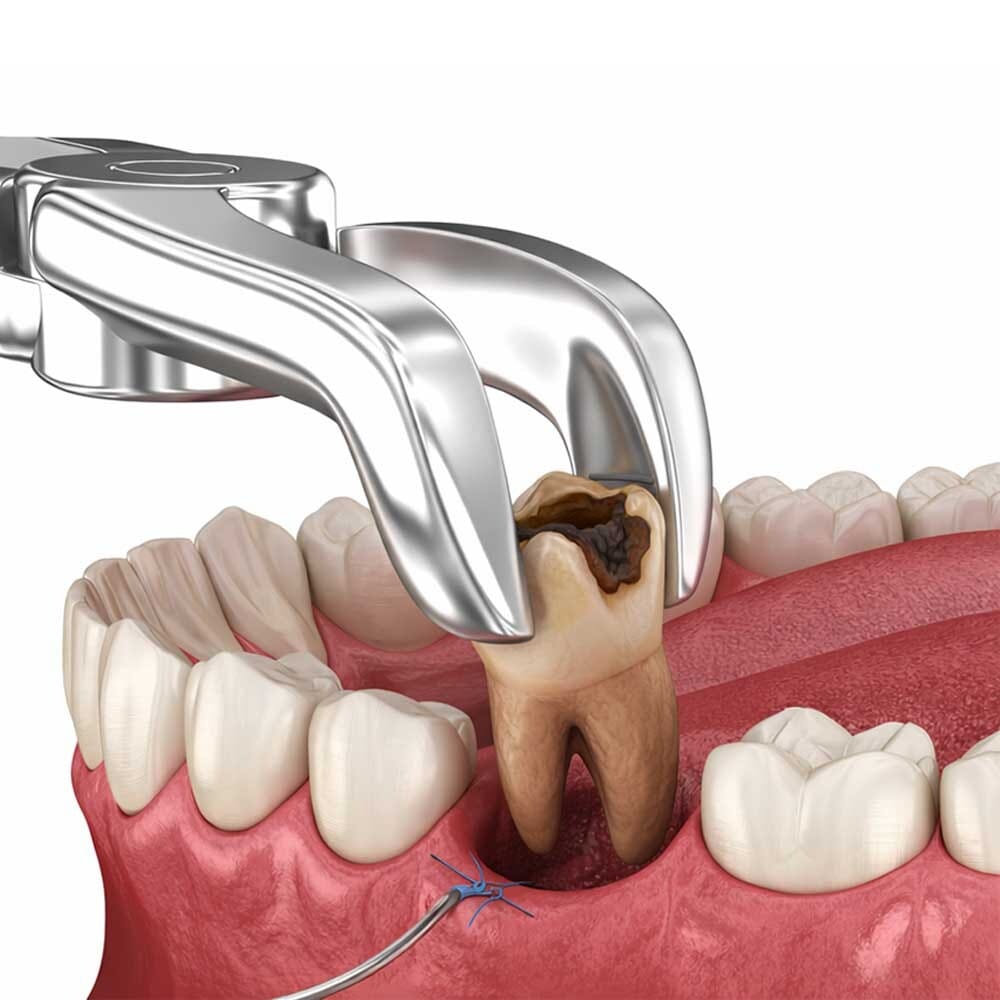
What Is Tooth Extraction?
A tooth extraction is a surgical process to remove a tooth from its socket, including the tooth root. You may also hear this procedure referred to as having a tooth pulled.
Why Is Tooth Removal Necessary?
We may recommend tooth extraction in Sheepshead Bay, Brooklyn, if you have any of the following issues, including:
- A tooth that has fractured vertically right down through its root.
- Severe damage to a tooth that has removed much of its original structure, leaving too little to restore.
- When teeth are overcrowded, tooth removal is sometimes recommended as part of orthodontic treatment.
- Severe tooth decay.
- A dental abscess, where a tooth is so severely infected that root canal therapy cannot save it.
- Impacted tooth, where a tooth is partially or entirely stuck under the gum.
- Advanced gum disease that has destroyed structures supporting teeth, so they become too loose to save.
We only recommend tooth extraction when we are certain a tooth has little chance of long-term survival or when it must be removed to help protect your oral and overall health. Whenever possible, we will work with you to save and restore your natural teeth, as they are always the preferred choice.
A deeply decayed or cracked tooth can sometimes be rebuilt and protected with a crown instead of extracted, and Dr. Levin, our dentist for a dental crown, will assess whether this option is right for you before any tooth is removed.
We Offer Different Types of Tooth Extractions in Sheepshead Bay
There are two main types of tooth extractions: simple and surgical.
Simple Tooth Extractions
A simple tooth extraction is performed when most or all of the tooth is visible above the gum. In this case, the tooth can be removed without making any incisions or removing any surrounding bone.
Special instruments are used to loosen the tooth so it can be extracted entirely and gently, taking care to minimize any damage to the surrounding gum tissues and bone.
Surgical Tooth Extractions
A surgical tooth extraction may be needed on a tooth that is severely damaged, or impacted and hidden from view, or where the tooth has broken off at the gum line.
In this case, a small incision is necessary to expose the tooth below the gum line, and it may be necessary to cut into the bone to remove the tooth completely.
What Our Patients Say About Us?
The Tooth Extraction Process Step-By-Step
A general outline of what to expect is provided below, but your treatment will be customized to suit the tooth requiring removal, the reason for its extraction, and your oral and overall health.
Step One: Numbing Your Tooth
Before we begin, your tooth is numbed with local anaesthetic. If the extraction is more complex, we may recommend sedation dentistry to help you feel more comfortable.
Step Two: Removing Your Tooth
Dr. Levin uses special dental instruments to loosen the tooth in its socket and remove it. If incisions are needed, these will be made in your gums, and if necessary, in the jawbone.
Making a small opening in the jawbone is often needed when extracting impacted wisdom teeth. The opening is smaller than the tooth, as it will be cut into small pieces to facilitate easier removal.
Step Three: Cleaning the Empty Socket
Once the tooth is removed, the empty socket is cleaned and disinfected. If you require bone grafting, a small amount of grafting material may be inserted into the socket at this point to help preserve it while it heals and prevent jawbone loss.
Step Four: Closing the Socket
If needed, stitches are used to close the empty socket. However, sometimes the empty socket is left open to heal naturally. When this is the case, a blood clot quickly forms in the empty socket, helping to protect it and aid in healing.
Extracting a tooth is a relatively quick procedure that can take anywhere from 30 minutes to an hour, or longer if multiple teeth need to be removed.
What to Expect after Tooth Extraction (Aftercare)
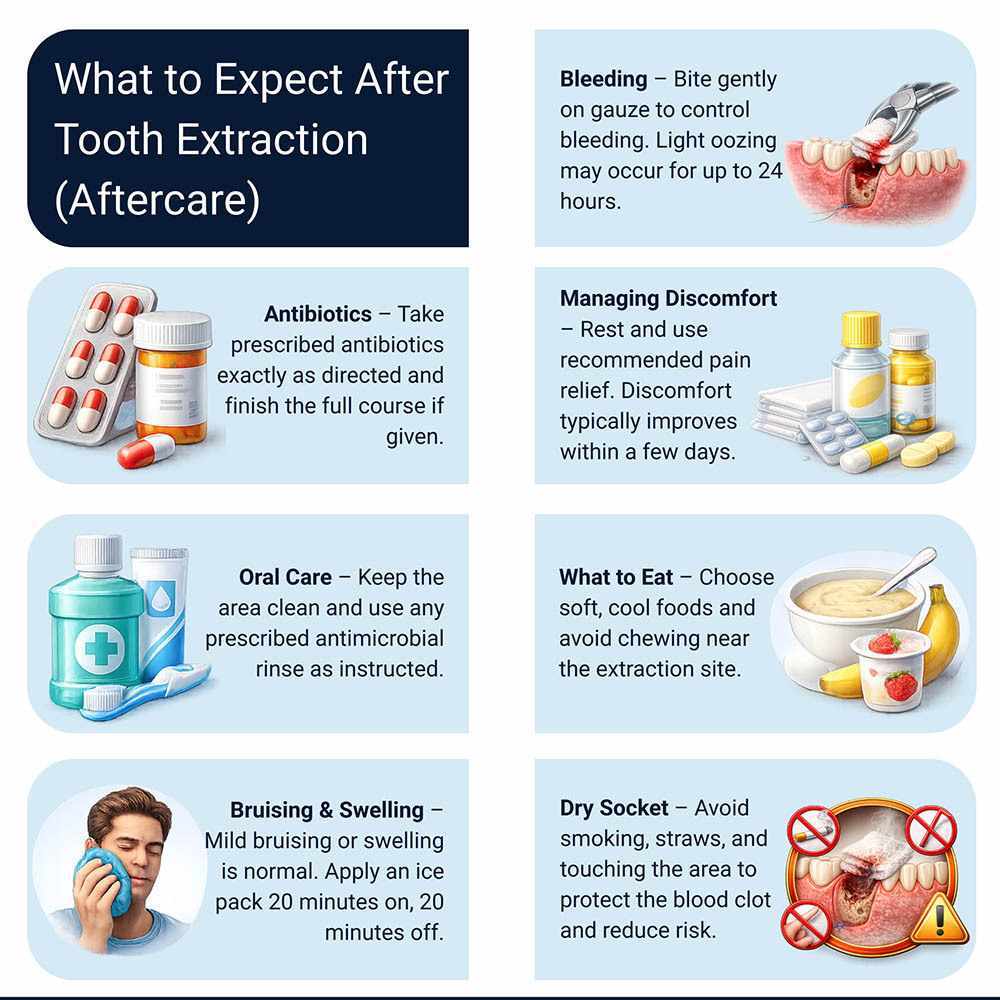
1. Bleeding
Immediately after the tooth extraction, you will be asked to gently bite down on a gauze pad to stop the bleeding and allow a blood clot to form. However, the extraction site may continue to ooze and bleed slightly for up to 24 hours afterwards. We can provide additional gauze pads for use at home.
2. Antibiotics
If we prescribe antibiotics, please take them as directed and finish the complete course. These will help prevent infection and enable you to heal more effectively. Not everyone will need antibiotics, but they might be necessary after removing a severely infected tooth or to treat a dental abscess.
3. Oral Care
Practicing good oral care can significantly reduce the risk of infection. We will provide clear instructions on how to maintain a clean and hygienic extraction site. We may prescribe an antimicrobial mouthwash to use several times a day for the first few days after tooth extraction.
4. Bruising & Swelling
Some bruising may develop, especially after surgical extractions, but should disappear within a few days.
You may experience some swelling around your jaw or in your gums near the surgery site. This can be managed by using an ice pack wrapped in a towel and holding it against your face for 20 minutes on and then 20 minutes off.
5. Managing Discomfort
You will need to get plenty of rest after your tooth is removed, and you may experience minor discomfort that can be controlled with over-the-counter pain relief. Alternatively, if multiple teeth are removed, we can prescribe something if needed.
Any discomfort and pain should begin to disappear within the first three or four days. Often the pain is worst on day three. If you find that the pain increases after this time, please get in touch with us.
6. What to Eat after a Tooth Extraction
Choose softer, cooler foods that don’t require any chewing, and try to avoid chewing on the extraction site. Good foods include eggs, pasta, applesauce, rice, and yogurt.
Avoid foods that could become stuck in the extraction site, such as those with nuts and seeds, or those that are very crunchy and hard.
We can provide you with a more comprehensive list of foods to eat and those to avoid before your dental surgery so that you can stock up before your teeth removal in Sheepshead Bay, Brooklyn.
7. Dry Socket
There is a small risk of dry socket after tooth extraction, especially if stitches aren’t used to close the empty socket. This is where the protective blood clot is dislodged or fails to form, allowing the socket to become infected.
You can reduce the risk of dry socket by avoiding contact with the extraction site with your tongue or finger, and refraining from smoking or using a drinking straw, as these can dislodge the blood clot.
Dry socket is relatively easy to treat, as the socket can be cleaned out and a protective dressing can be placed to help the socket heal.
Tooth Extraction Benefits
A severely infected or decayed tooth can often cause discomfort and pain. Removing the tooth helps eliminate the harmful bacteria causing the infection, thereby quickly relieving the pain.
Additionally, a severe tooth infection, such as a dental abscess, can significantly impact overall health without proper dental care. Leaving the tooth in place allows the infection to progress, potentially making you feel very unwell, and in rare cases, it can even be life-threatening.
Removing a tooth in preparation for orthodontics will help provide a better treatment outcome, more evenly aligned teeth, and a balanced bite. Once a tooth is removed and the site has healed, replacing it with a tooth implant helps preserve the jawbone and keeps neighboring teeth from shifting.
Are There Any Risks with Tooth Extractions?
Any surgical procedure carries a small level of risk. We take every precaution to minimize the risk of potential complications. However, the risks can include:
- Dry socket.
- Damage to the sinus cavities when removing upper back teeth.
- Nerve damage that may be temporary or permanent.
- Problems healing.
- Infection.
FREQUENTLY Asked Questions
Is Tooth Extraction Painful?
The process to remove the tooth should never feel painful. You may experience some discomfort after the anesthetic wears off and during the healing process, which can be managed with pain relief.
How Long Will Recovery Take?
Recovery depends on the location of the tooth, the complexity of the tooth removal, and the number of teeth extracted. Generally, you can expect to feel back to normal within a few days and can return to everyday activities two or three days afterward.
Can I Smoke after Tooth Removal?
Smoking and vaping can slow down healing by constricting the blood vessels and preventing nutrients from reaching your gums. It’s best to avoid this habit or using any tobacco products for the first few days afterward.
Usually, most people find healing and recovery after a tooth extraction to be smooth, quick, and uneventful. However, if you notice increasing pain and discomfort a few days afterward, develop a fever, or see pus around the extraction site, this could indicate an infection requiring urgent dental care, so please contact us immediately.
We know dental decisions can feel overwhelming. Whether you need a tooth extraction in Sheepshead Bay or simply want to explore your options, VitaDent is here for you. You can visit us at our convenient Avenue X office in Sheepshead Bay, Brooklyn (11235), where we’ll make sure you feel comfortable and supported every step of the way.