
Table of contents
Dental caps, or crowns, and veneers are two commonly used restorations, but there is a lot of confusion about the differences. Modern crowns and veneers are made from durable and lifelike ceramic materials, and each can provide highly aesthetic results. Understanding how these restorations work and when they are appropriate will help you make an informed choice about your dental care.
Both types of restorations can improve the overall appearance of teeth, creating a more aesthetically pleasing smile. Both can hide imperfections such as chips, cracks, or discoloration, but the processes for making and fitting them are quite different.
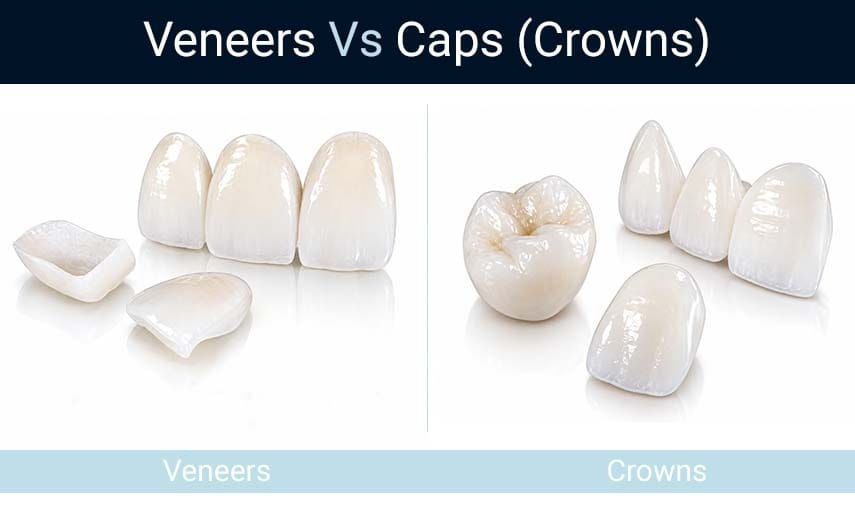
What Is a Dental Crown?
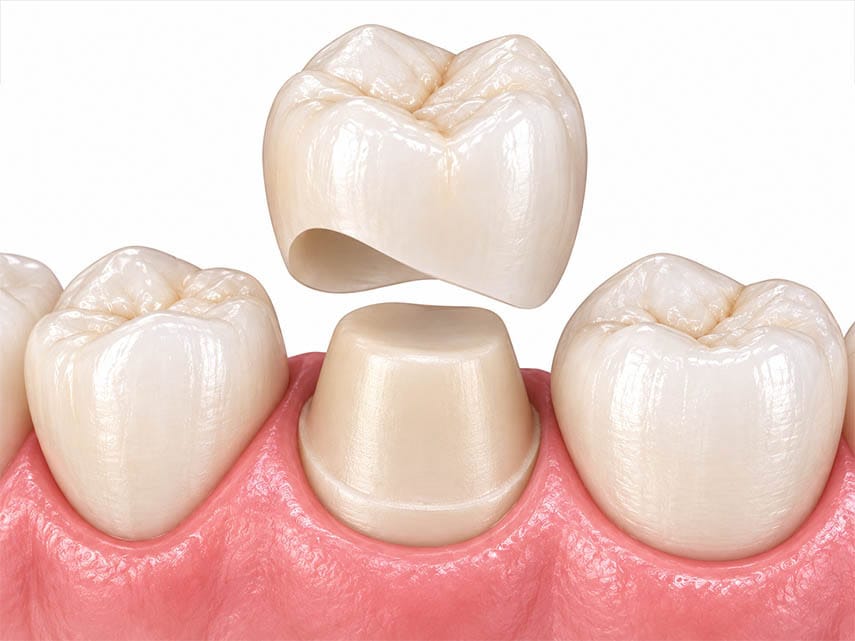
This restoration is also called a cap because it caps or covers the tooth entirely. It is designed to protect teeth that are more severely damaged and likely to have lost a significant portion of their natural tooth structure.
When this is the case, the damaged tooth cannot be repaired with a filling, as it wouldn’t be strong enough. A dental crown fits over the tooth, right down to the gum line, and once in place, you cannot see any of the natural tooth underneath.
The crown is designed to fit tightly and securely over the tooth, sealing it completely. Once in place, you can bite and chew normally without any fear of pain or of the underlying tooth crumbling or cracking.
You can have a dental crown fitted over any tooth in the mouth where it is needed. The result of having a crown should be a natural -looking tooth that is strong, durable, and long-lasting.
When Is a Dental Crown Needed?
Your dentist will suggest a crown if you have a more badly damaged tooth. For example, if you have a tooth that is severely decayed or has received root canal therapy, and the damage is too large to be repaired with a filling.
Crowns can be used to cover teeth that may have broken off near the gum line or have been subject to significant trauma, such as a blow to the mouth.
Another use is restoring a dental implant, in which a tooth is replaced with a small post inserted directly into the jawbone. The post protrudes above the gum line and is covered with a dental crown that is screwed onto the post.
Related article: Cracked Tooth Symptoms You Shouldn’t Ignore
What Is a Veneer?
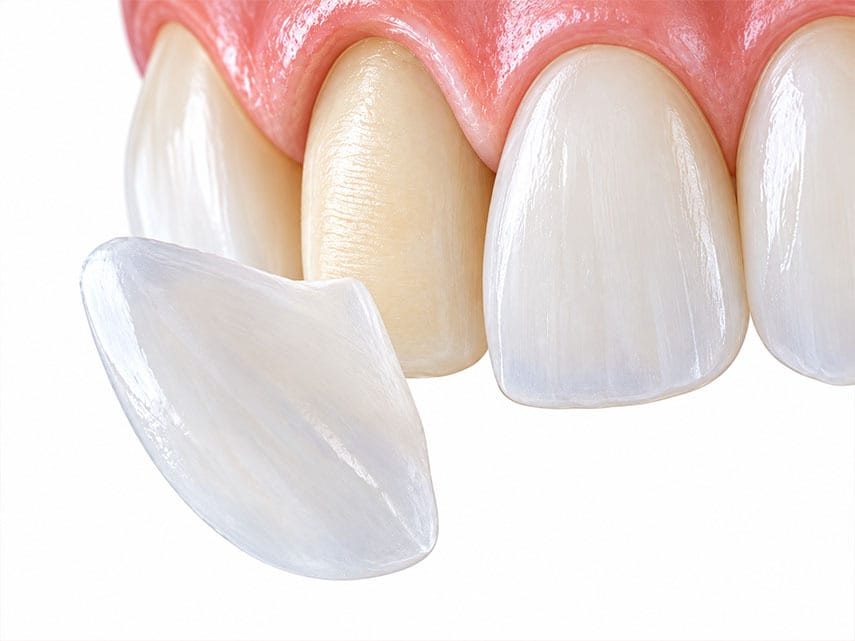
Unlike a crown, a veneer covers only the front surface of a natural tooth. This can include the incisal (biting) edge of the tooth as well as the sides. The back of the tooth nearest to the tongue is left uncovered.
Veneers are used only to cover your front teeth, right at your smile line. They are not used to cover premolars or molars, which are your back teeth.
When Is a Veneer Recommended?
The main purpose of a veneer is to improve the appearance of your teeth. Veneers are not designed to provide significant strength or structure to a tooth. They are therefore unsuitable for teeth that are severely damaged, for example, a tooth that is badly decayed or has lost a large part of its original structure.
Your dentist may suggest a veneer if you have a tooth with minor damage, such as small chips or cracks. Veneers can be used to hide teeth that are internally discolored and that do not respond to an ordinary tooth whitening treatment. They can improve the size, shape, and appearance of teeth that may be too small or misshapen.
Veneers are often used as part of a smile makeover or when teeth are only slightly misaligned, as an alternative to orthodontics.
Read more: How Long Does Teeth Whitening Last?
Understanding the Process for Dental Crowns and Veneers
The process for having a dental crown or veneer is quite different. A dental crown requires much more tooth preparation and is, therefore, more invasive than a veneer.
The Process for a Dental Crown
When you have a dental crown, your dentist needs to reshape the tooth, removing a substantial portion of the original structure during preparation. Reshaping the tooth is essential because it creates enough room for the new crown to fit over your tooth, ensuring it doesn’t feel too large or look bulky and unnatural.
Below is a brief outline of what to expect if you need a dental crown.
- Before treatment begins, your dentist numbs the tooth so you feel no discomfort or pain.
- Once numb, your dentist carefully reshapes the tooth, getting rid of all infection, decay, and damaged portions.
- After preparing the tooth, a detailed dental impression is taken.
- The impression is used to create your new crown, which normally takes 1 to 2 weeks at least.
- The prepared tooth is protected with a temporary crown until your permanent crown is ready.
- On your next visit, the temporary crown is removed, and your permanent crown can be bonded in place.
The Process for a Dental Veneer
The procedure for placing a dental veneer is less invasive, as only a minimal amount of tooth structure is removed from the front surface and biting edge of the tooth. Sometimes, little or no tooth preparation is needed.
Below is a brief outline of what to expect.
- If your dentist needs to prepare the tooth, they will numb it first.
- Tooth preparation for a veneer typically involves removing a minimal amount of tooth enamel to ensure the veneer fits properly without looking and feeling too big.
- Once the tooth is ready, your dentist takes a detailed dental impression.
- A temporary veneer protects the tooth while your permanent veneer is being made.
- On your next visit, your dentist removes the temporary veneer and can bond your permanent veneer in place.
If you don’t require any tooth preparation, then you will not need a temporary veneer. Instead, your dentist will take a detailed dental impression to fabricate your new veneer that can be fitted during your next visit.
Should I Have a Dental Crown or Veneer?
Because each of these restorations is quite different, it’s best to follow your dentist’s guidance. After examining your mouth and listening to your concerns and treatment goals, they can recommend the most suitable restoration to achieve your desired results.
If you have a painful or infected tooth or require root canal therapy, a dental crown will almost certainly be the recommended restoration because it provides the best protection for your tooth. If you are only looking to make cosmetic changes to your teeth’s appearance or are interested in a smile makeover, dental veneers may be more suitable.
At VITAdent Brooklyn Dental Group, our dentists can examine your teeth and recommend the restoration that best fits your needs. Contact us at (718) 766-0002 or schedule an appointment online to get started.