
Table of contents
When one or more teeth are missing, we can restore them with a beautiful, custom-made dental bridge in Sheepshead Bay. The bridge is crafted using the latest materials to blend seamlessly with your natural teeth, restoring your ability to smile, talk, and eat with confidence and comfort. Dental bridges are a key part of our comprehensive restorative dentistry treatments designed to rebuild healthy, functional smiles.
What Are Dental Bridges?
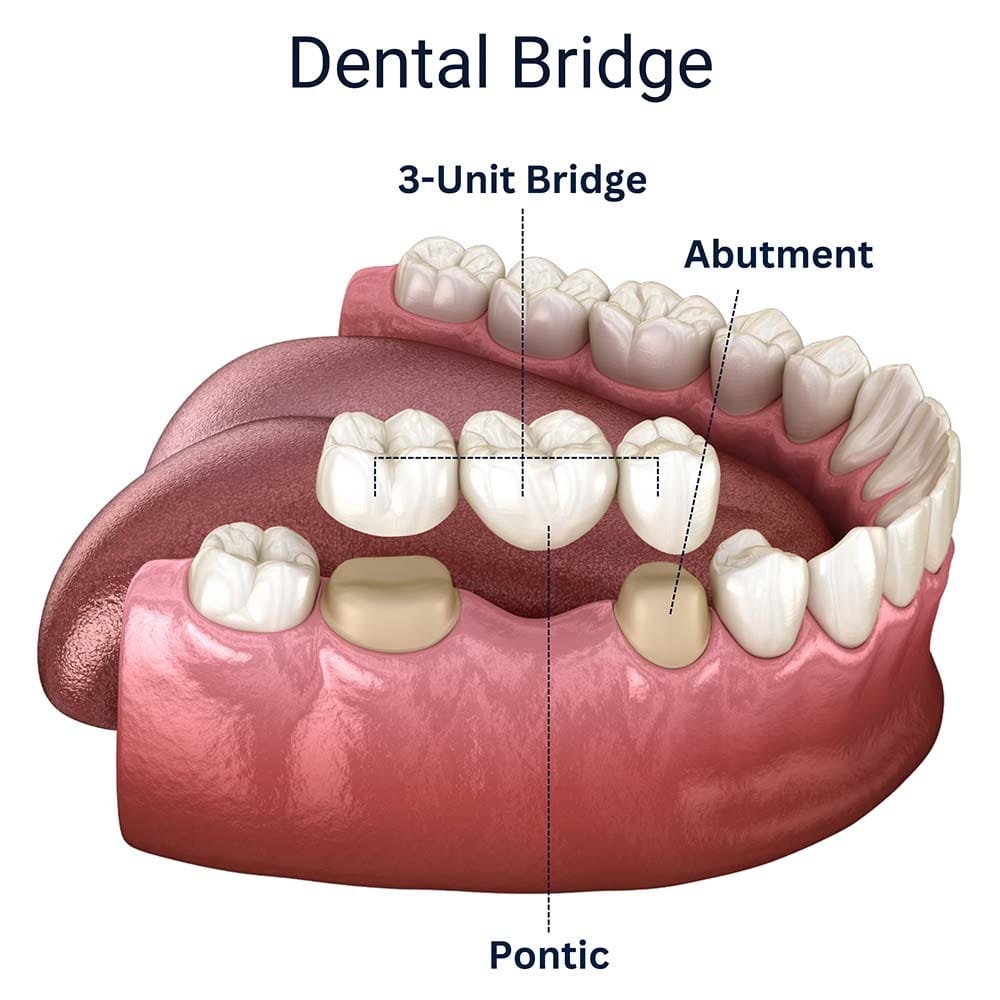
Dental bridges are designed to fill the gaps left by missing teeth. They are fixed appliances that are permanently cemented onto existing teeth located on either side of the gap or next to it, and have two components, which are:
- Abutment teeth supporting crowns. The abutment teeth used to support the bridge must be reshaped and covered with dental crowns. These teeth must be strong enough to support the bridge successfully.
- Pontics. Each replacement tooth, called a pontic, is attached to the crowns used for support. It is designed to look like a real tooth, resting on the gum below.
You can have a dental bridge to replace one or more missing teeth, provided that these teeth were originally adjacent to each other.
Alternatively, dental bridges can be supported by implants. This may be an option if abutment teeth are not available or not strong enough to support a dental bridge.
Types of Dental Bridges
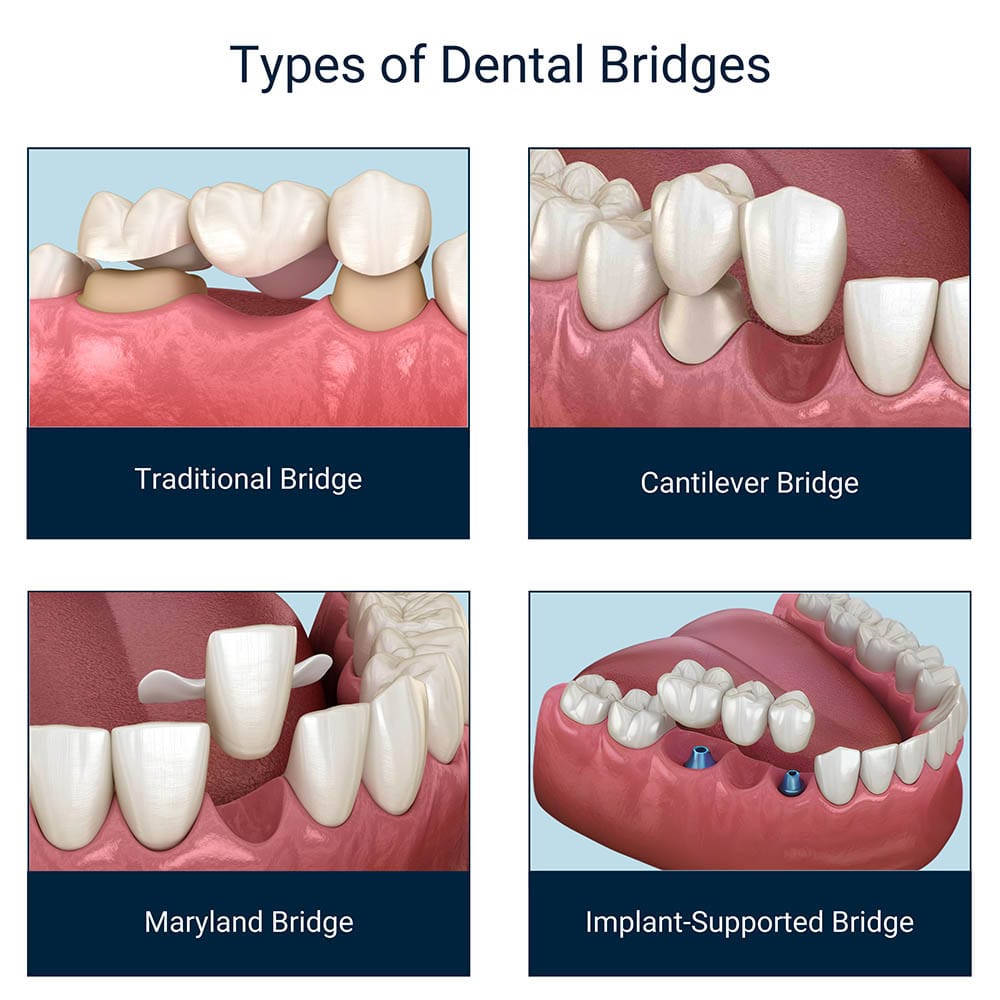
There are four main types of dental bridges. The bridge recommended by Dr. Levin will depend on the number of teeth missing and their location, and whether natural teeth are available for support.
These bridges are:
- Traditional dental bridges.
- Cantilever bridges.
- Maryland or resin-bonded bridges.
- Implant-supported bridges.
1. Traditional Bridges
Most dental bridges are traditional, utilizing natural teeth for support on either side of the gap. These teeth are crowned, and the pontic is attached between them. The bridge is permanently cemented onto the abutment teeth.
A traditional bridge is ideal if the abutment teeth on either side of the gap are strong and able to support the restoration securely. This restoration can be strong and secure, providing excellent biting strength while restoring appearance.
2. Cantilever Bridges
Cantilever bridges are used less often and are typically chosen when there is only one suitable abutment tooth next to the gap. A crown is placed on that tooth, and the replacement tooth (pontic) is attached to it, extending into the empty space without support on the other side.
Because this design relies on support from just one side, it is not as strong as a traditional bridge and is only recommended in specific cases. In some situations, two crowns may be placed on the same side to improve stability.
This option is usually considered when teeth are missing on one side of the gap, or when the nearby teeth are not strong enough for a traditional bridge or may not last long-term.
3. Maryland Bridge
This type of bridge is slightly different, as it doesn’t use crowns to hold it in place. Instead, metal or ceramic wings are created to fit on the inner surfaces of teeth. These wings, bonded to the teeth with resin, hold the pontic in place.
These bridges are less resilient than a traditional or cantilever bridge. We typically recommend a Maryland bridge when restoring small front teeth, such as the lower incisors. This is because these teeth are not used for chewing food, and therefore the bond between the wings and the abutment teeth is less likely to fail.
If you have a Maryland bridge and it does pop off, it can generally be re-cemented in place. However, this must be done professionally, and you would need to schedule a visit to VitaDent.
4. Implant Supported Bridge
An implant-supported bridge works like a traditional bridge, but instead of relying on natural teeth, it is supported by dental implants. These are small titanium posts placed into the jawbone. Once healed, abutments are attached to the implants and extend above the gum line to support the bridge.
The bridge is then secured onto the abutments, and small access points are sealed with tooth-colored material for a natural finish. This option is used when several teeth are missing or when nearby teeth are not strong enough to support a conventional bridge. It is a more complex treatment and takes longer to complete.
What Our Patients Say About Us?
Materials Used to Fabricate Dental Bridges
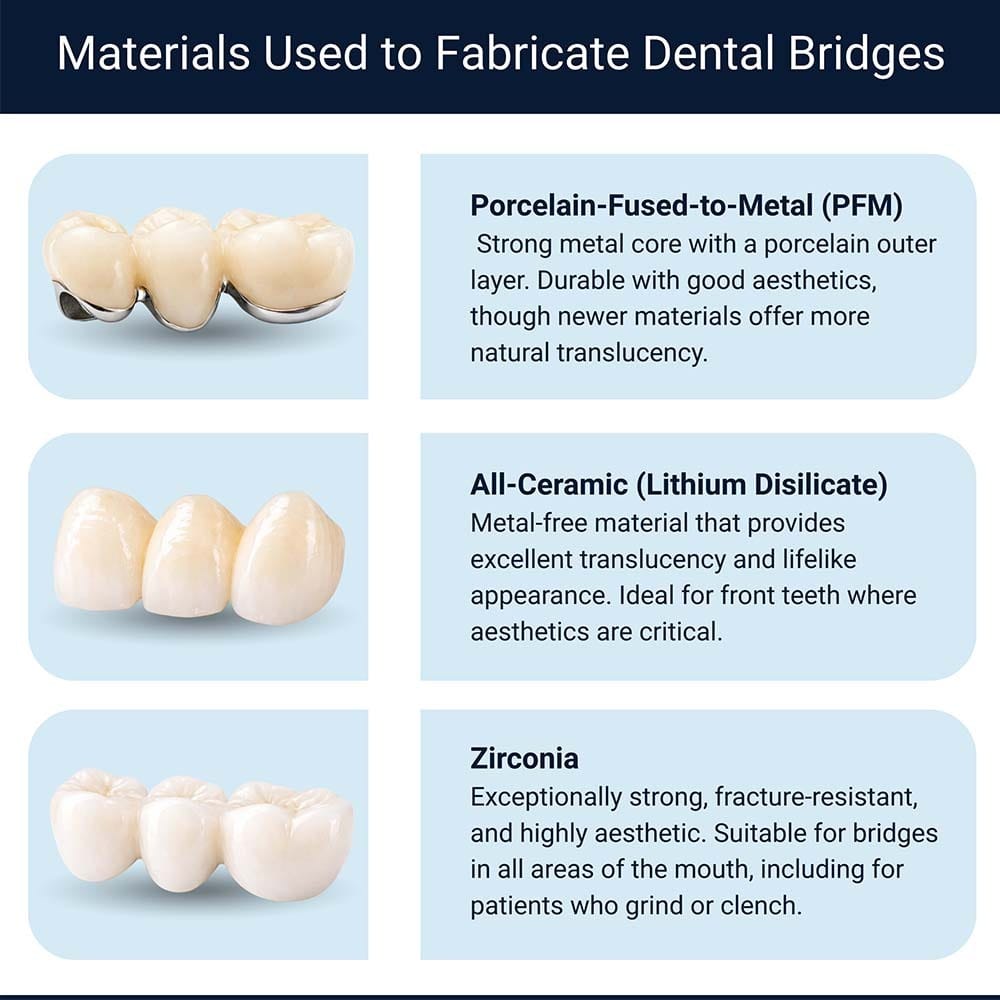
Materials used to fabricate your dental bridge include porcelain fused to metal, all-ceramic, or zirconia.
Porcelain Fused to Metal [PFM]
These bridges have a thin metal substructure covered with porcelain. They provide reasonably lifelike results and are quite strong, but an opaque porcelain is needed to mask the metal underneath. More modern materials can provide better aesthetics.
All-Ceramic
An all-ceramic bridge contains no metal and provides excellent aesthetics. It is made from a material called lithium disilicate that is very translucent and beautiful.
All-ceramic bridges are a suitable choice for replacing front teeth, particularly when aesthetics are a priority. They are less suitable for replacing teeth, which may require a stronger material.
Zirconia
Zirconia is a popular material due to its exceptional strength, durability, and aesthetically pleasing appearance. We can create dental bridges from zirconia for any area of the mouth. They are even suitable for people with bruxism (clenching and grinding), as zirconia will not chip or crack easily and doesn’t damage the opposing teeth.
Who Needs a Dental Bridge?
There are several situations where we may recommend a dental bridge, including:
- If you are missing one or more teeth that were originally side-by-side.
- If you have trouble chewing comfortably or speaking clearly due to gaps in your smile or teeth that are failing or painful.
- Correcting problems caused by missing teeth, as leaving a gap in your smile can lead to teeth shifting out of place and misalignment.
Benefits of Dental Bridges in Sheepshead Bay, Brooklyn
Dental bridges can provide some clear benefits, which include:
- Tooth-supported bridges are minimally invasive to make and fit. An implant-supported bridge is a little more complex and requires oral surgery, but it is ideal when natural teeth cannot be used for support.
- A dental bridge will restore your facial appearance, support your cheeks and lips, and restore your ability to smile confidently.
- Replacing missing teeth with a dental bridge helps prevent your remaining teeth from shifting out of place.
- A dental bridge restores your ability to bite and chew, enabling you to eat whatever you wish and potentially make healthier food choices, benefiting your overall health.
Understanding the Dental Bridge Procedure Step-By-Step
You will need to visit VitaDent several times during this treatment. An outline of what to expect and how your custom bridge will be fabricated is outlined below.
Step One: Consultation & Treatment Planning
Initially, you will need a consultation with Dr. Levin to determine if you require a bridge, and if so, the most suitable type and material to make it.
Your options can depend on:
- How many teeth are missing.
- Whether you have abutment teeth that are strong enough to support a bridge.
- Your oral health.
- Your budget and personal preference for treatment.
Dr. Levin may wish to take digital dental X-rays to assess your oral health more closely and identify any issues that may require treatment before your bridge is made and fitted, including evaluating any teeth that have previously undergone root canal treatment. Maintaining a healthy mouth will help make your treatment more successful.
Dr. Levin will also discuss your custom treatment plan, detailing all possible options, including material choice and associated costs. He is more than happy to answer your questions, so please don’t hesitate to ask anything you wish to make a more informed choice.
Step Two: Tooth Preparation & Impressions
Once your treatment plan is confirmed, the supporting teeth (abutment teeth) are prepared for the bridge. Local anesthetic is used to keep you comfortable while the teeth are gently reshaped to allow space for the crowns.
After preparation, we take a detailed impression and record the shade for your new bridge. This information is sent to a dental lab, where the bridge is custom-made. The process typically takes around two weeks or longer, depending on the case and materials used.
Step Three: Temporary Bridge Placement
While your new bridge is being made, we can fit a temporary bridge over the prepared teeth, which will help protect them and prevent any tooth sensitivity. It will also ensure that you can smile and speak with confidence.
A temporary bridge is more fragile than a permanent bridge, so it’s best to avoid biting or chewing anything very hard in case it becomes dislodged or fractured.
You may not require a temporary bridge if you need a Maryland bridge, as the abutment teeth require no preparation.
Step Four: Custom Bridge Fitting & Permanent Placement
When your new bridge is ready, you return to our dental office so we can remove the temporary bridge and try in your more permanent restoration. Dr. Levin will check that it fits precisely, and you will be able to approve its appearance before it is permanently bonded onto your teeth.
Step Five: Final Adjustments
The final step is to make any minor adjustments to your bridge. Sometimes it’s necessary to adjust the biting or chewing surface to ensure your teeth bite together perfectly.
Other Restorative Dentistry Procedures We Offer
FREQUENTLY Asked Questions
How Do I Care for My Dental Bridge?
Before you leave our dental office, we will show you how to care for your dental bridge, including how to clean around the crowns and underneath each pontic. Special tools can make this task easier, or we may recommend investing in a WaterPik.
Please follow these instructions closely, as they will help ensure your abutment teeth remain strong and healthy, and that your bridge lasts longer.
How Long Will My Dental Bridge Last?
A dental bridge can last 10 years or more, depending on how well you maintain your oral hygiene and how regularly you attend dental checkups and hygiene visits.
During routine checkups, we assess the condition of your bridge to make sure it is stable and protecting the underlying teeth. Professional cleanings also help extend its lifespan.
Over time, replacement will be needed, as all dental restorations naturally wear down.
Will My Bridge Look Natural?
We take meticulous care when custom-designing our dental bridges, ensuring they look and feel natural and comfortable. Each bridge tooth is designed to be the right size, shape, and color. Using the latest porcelain also helps deliver more natural, beautiful results.
Will Dental Insurance Cover the Cost of My Bridge?
Your dental insurance may cover at least part of the cost of the bridge since it can help protect your oral health and restore functionality. The percentage of coverage can depend on the type of bridge and the materials used to fabricate it.
Is Getting a Dental Bridge Painful?
The process of making and fitting a dental bridge should not be painful. We ensure that your abutment teeth are numb before reshaping them.
However, you may experience some temporary sensitivity after your dental bridge is first fitted, and it might feel a bit strange. These sensations should quickly disappear as you become accustomed to your new restoration.
Dental bridges in Sheepshead Bay from VITAdent Brooklyn Dental Group can restore your smile, improve chewing, and protect your remaining teeth. With custom-made solutions that balance function and aesthetics, this treatment offers a long-lasting way to replace missing teeth. Contact us at (718) 766-0002 today to schedule your consultation or visit our office at 2220 Avenue X in Sheepshead Bay, Brooklyn (11235).